
Last updated November 3, 2026
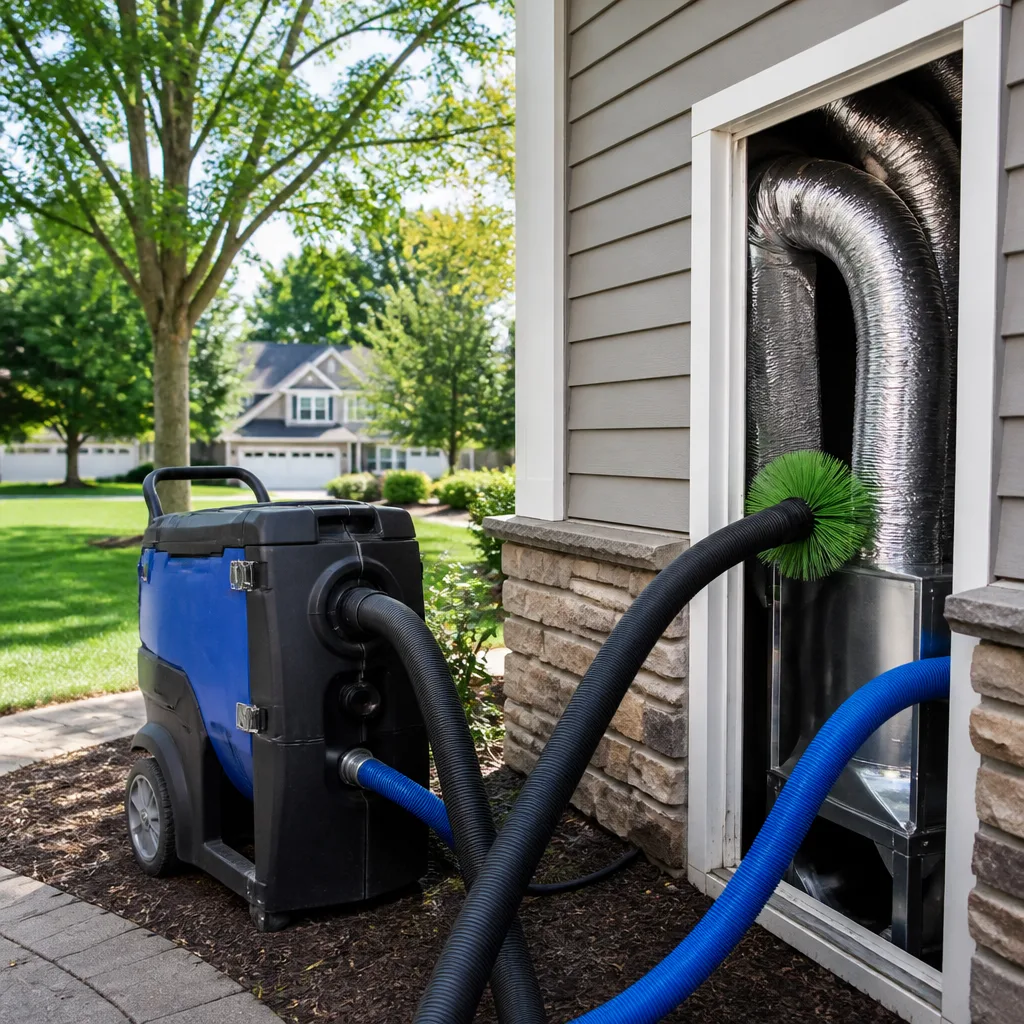 Whole-home duct cleaning
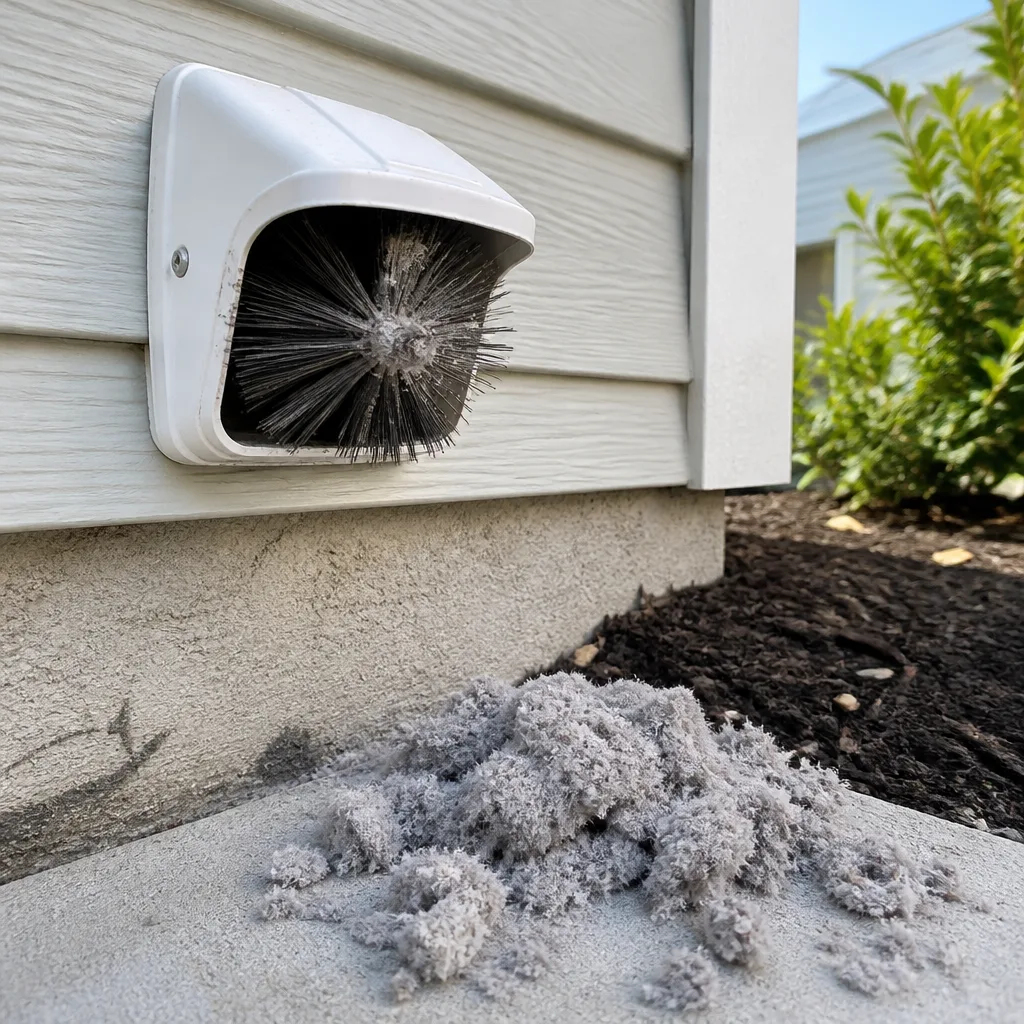 Dryer vent cleaning
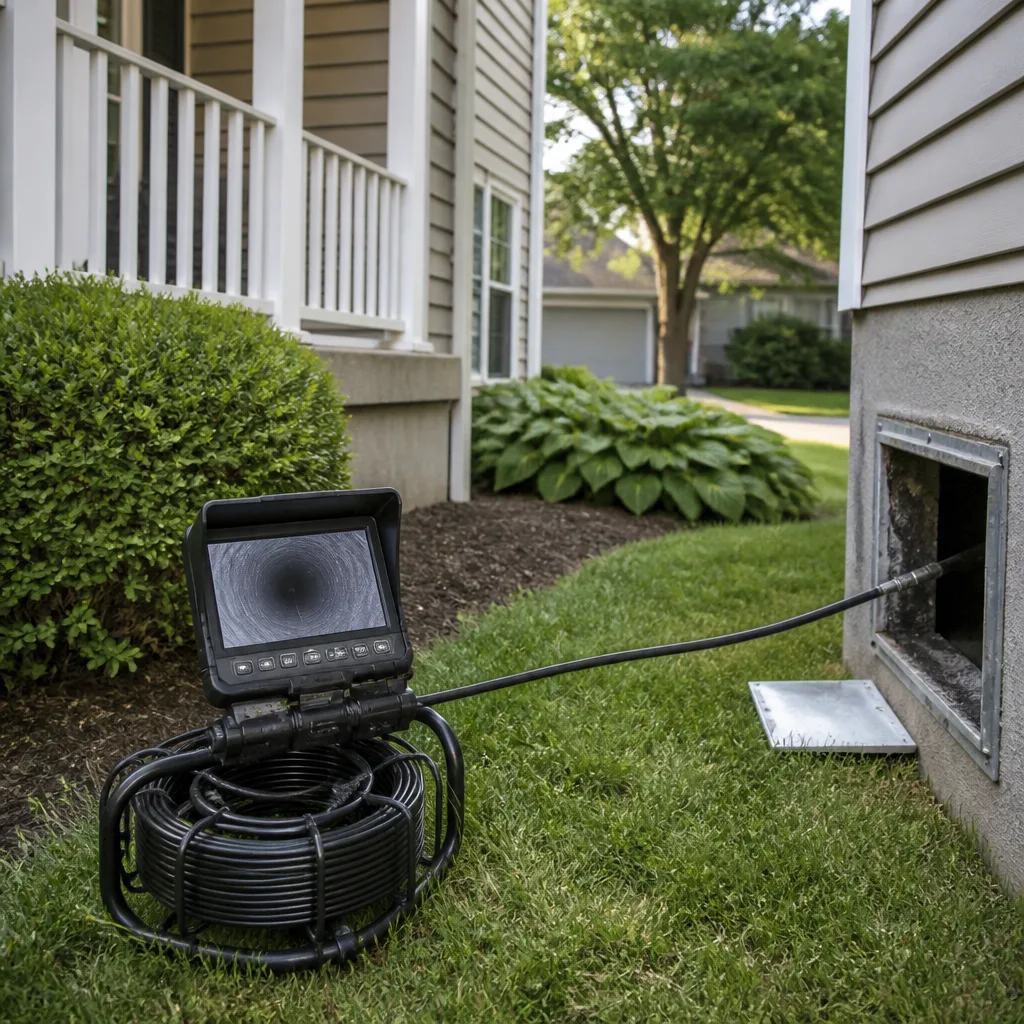 Camera inspection
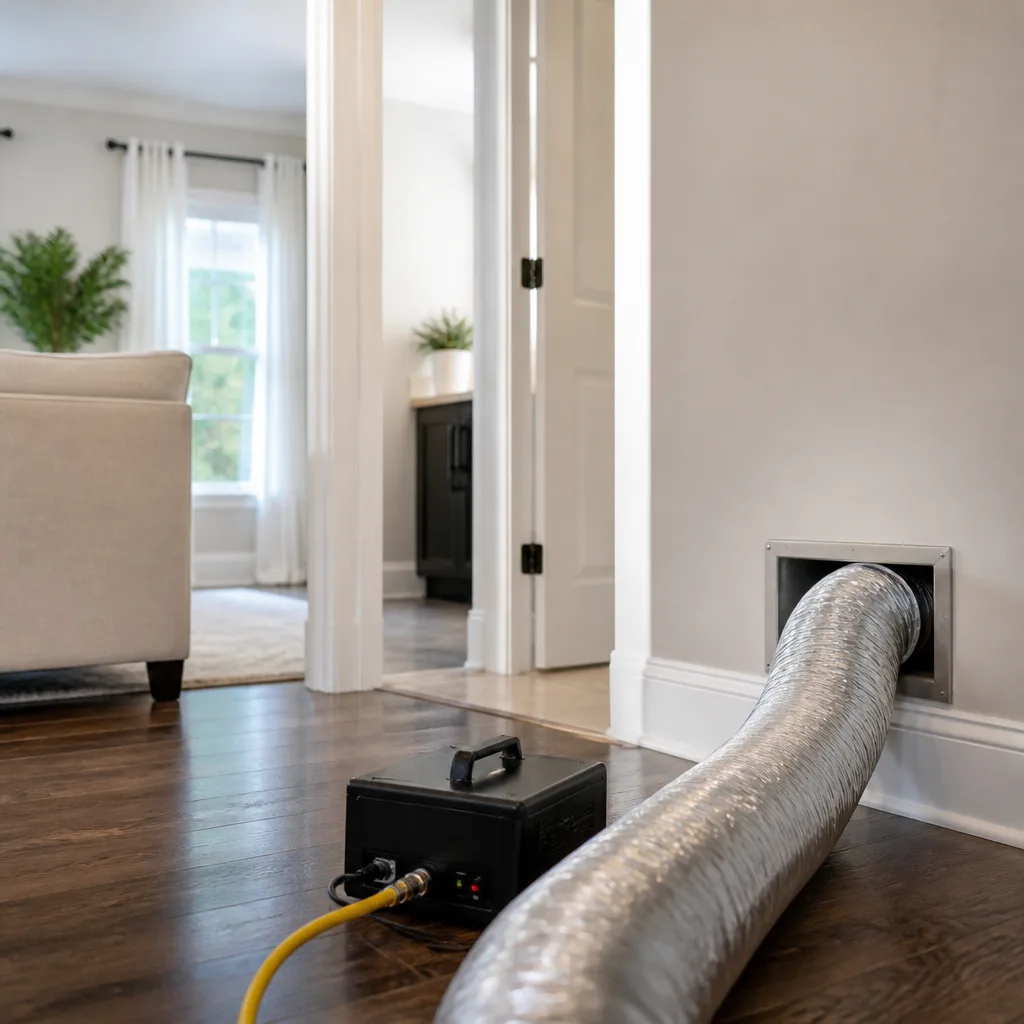 Sanitizing & deodorizing
Whole-system duct and dryer vent check with before-and-after photos - you see exactly what came out of your vents
That "$99 whole-house special" is a bait ad - the real number appears once they are in your hallway, or the "clean" is a shop-vac at the register. We photograph the inside of your ducts before and after instead.
The Complete Air Duct Cleaning Guide for Camarillo Homeowners
The EPA doesn’t recommend routine duct cleaning on a fixed schedule, and most Camarillo homeowners have never read that guidance. Meanwhile, the ducts in a typical Camarillo tract home carry more than just dust. They carry eucalyptus particulate, marine layer moisture, wildfire ash, and construction debris from the 1960s and 70s building boom. This guide – along with our The Complete Guide to Air Duct Cleaning in Camarillo – explains what actually happens inside your ducts, when cleaning is genuinely warranted, how a proper cleaning is performed, and how to verify the work was done correctly. No scare tactics. Just the technical reality of duct systems in Camarillo, California.
Quick Answer
Air duct cleaning in Camarillo involves physically removing accumulated debris from duct walls using contact-based brushing and high-powered vacuum collection, not just blowing air through the system. Most homes benefit from cleaning every 3 to 5 years, though homes near eucalyptus stands, recent wildfire smoke exposure, or documented rodent activity may need service sooner. A proper cleaning should include access panel installation, source removal per NADCA standards, and before-and-after photo documentation.
Styles & brands we work with
- Whole-home duct cleaning
- Dryer vent cleaning
- Camera inspection
- Sanitizing & deodorizing
Table of Contents
- What Duct Cleaning Actually Involves
- How Camarillo’s Coastal Climate Affects Your Ducts
- Contact-Vacuum Cleaning vs. Agitation Methods: What the Difference Means
- Attic-Run Flex Duct: The Camarillo Tract Home Problem
- Signs You Actually Need Duct Cleaning
- How to Read a Pre- and Post-Cleaning Inspection Report
- What ‘Source Removal’ Means Under NADCA ACR Standards
- What Duct Cleaning Costs in Camarillo and What Drives the Price
What Duct Cleaning Actually Involves
A proper duct cleaning is not a “blow and go” job where a technician shoves a compressed air wand into your vents and calls it done. That method loosens debris but leaves most of it suspended in the duct or pushed deeper into the system. A legitimate cleaning follows a containment-first protocol. Here’s what a thorough service looks like step by step.
The Complete Process
- System inspection. The technician examines the return registers, supply registers, the air handler or furnace cabinet, the blower motor, the evaporator coil if accessible, and any visible duct runs. In Camarillo homes, this often means crawling into attics with low clearance and maneuvering around truss framing from the 1950s through 1980s.
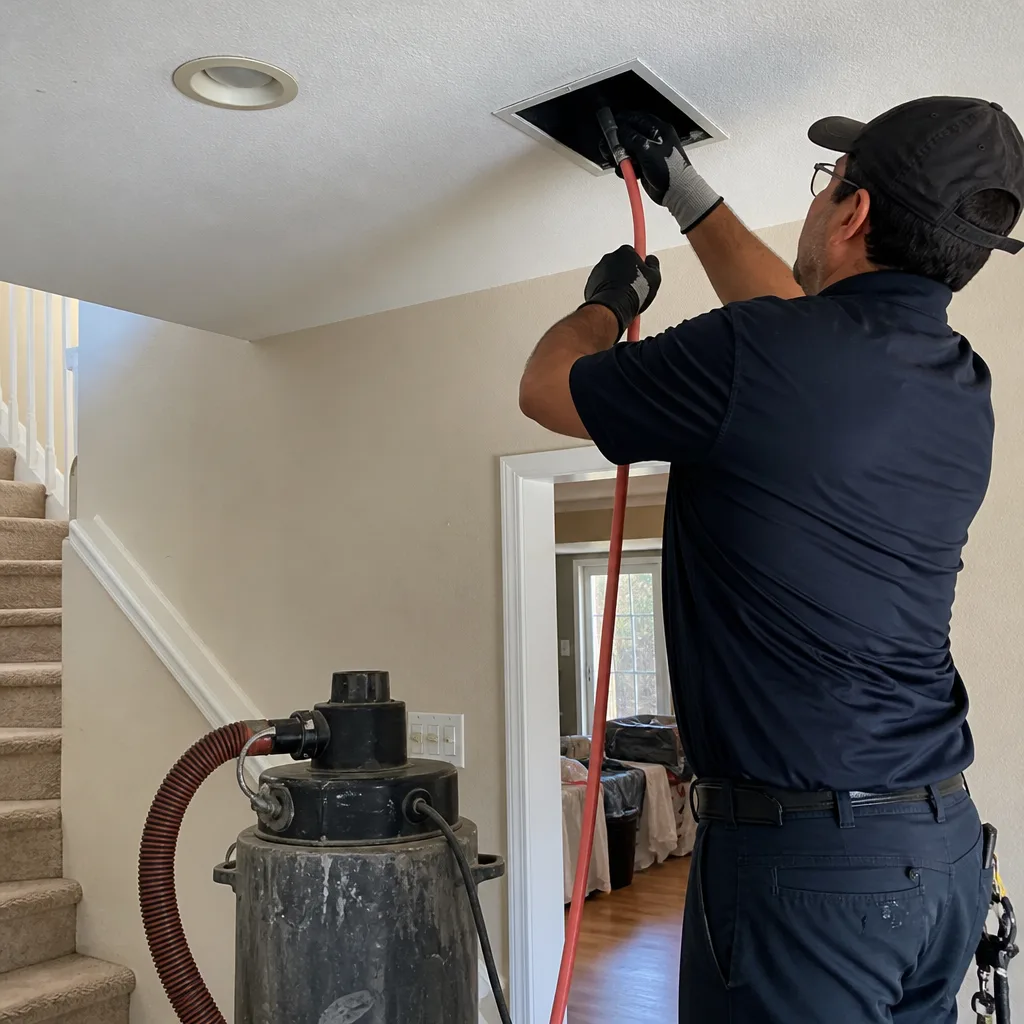
- Access panel installation. To reach the main trunk lines, a technician must cut access panels into the ductwork. If a contractor claims they can clean your entire system through existing registers alone, they’re skipping the most contaminated sections. Access panels are standard practice and should be resealed with screws and foil tape or duct sealant after the job.
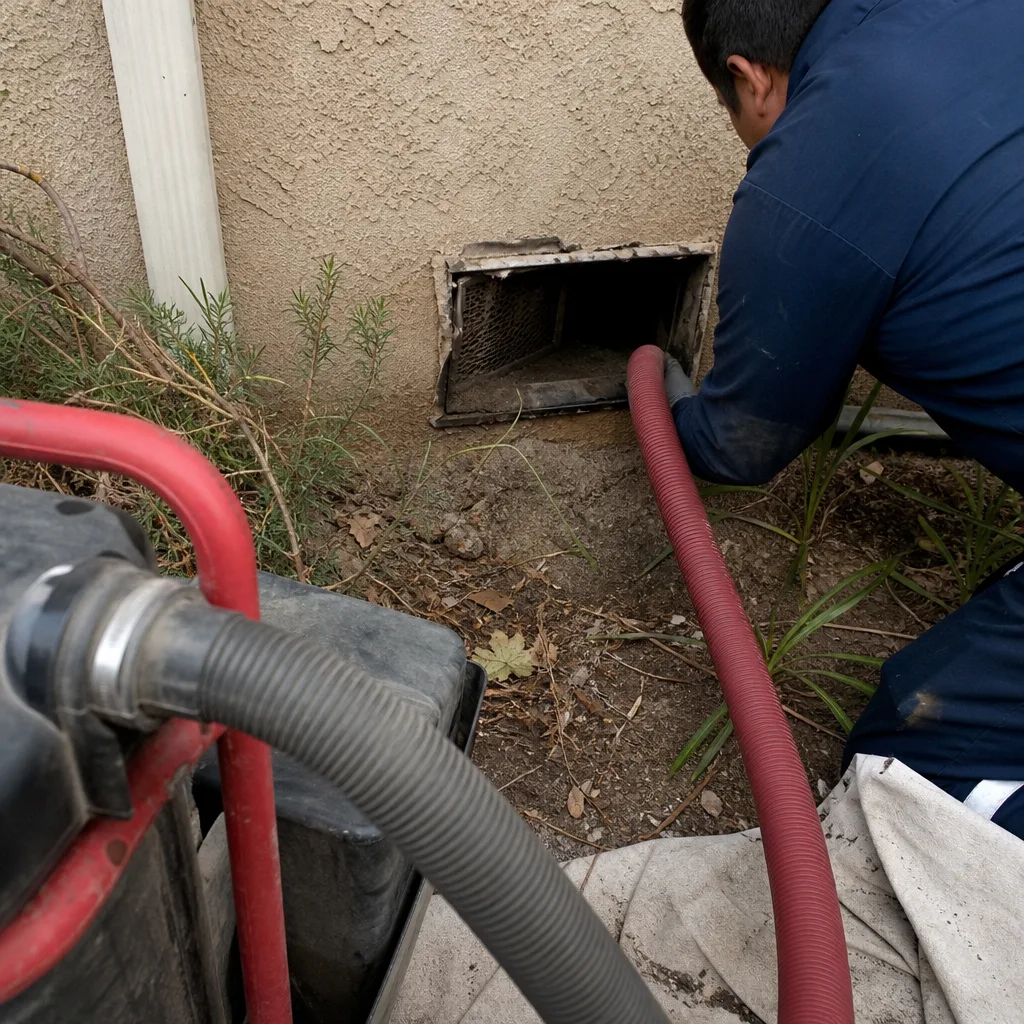
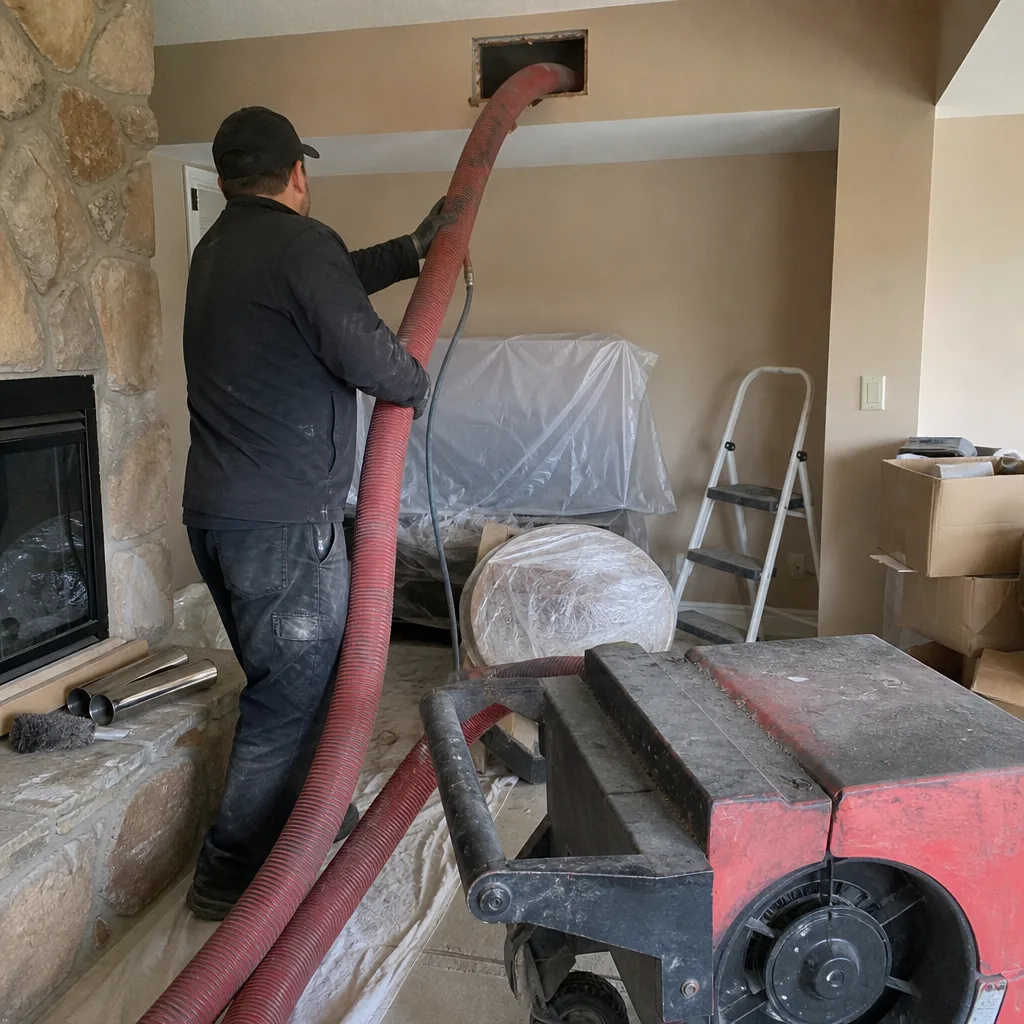
- Containment and negative pressure. Remediation-grade equipment creates negative air pressure in the duct system so that dislodged particles get pulled toward the vacuum collection unit rather than pushed into your living room. This is where equipment choice matters. A consumer-grade shop vacuum cannot maintain the airflow needed to capture fine particulate from a full duct run.
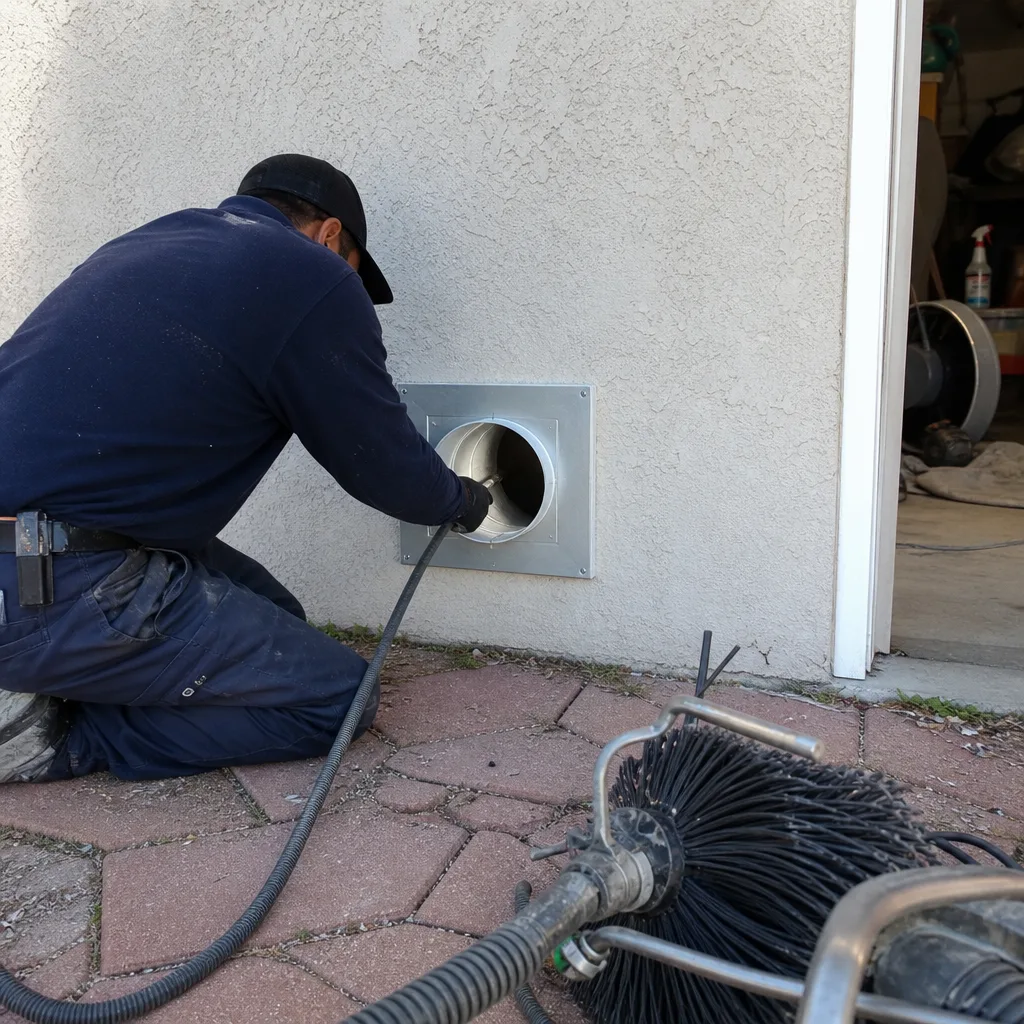
- Contact cleaning of duct walls. The debris that sticks to duct walls does not come off with air alone. It requires physical agitation. Rotobrush contact-cleaning systems spin nylon or polypropylene brushes against the duct interior while a vacuum pulls the dislodged material out simultaneously. Different duct materials need different brush stiffness. A rigid galvanized steel trunk can handle a stiffer brush than fragile flex duct.
- Cleaning of system components. The blower motor, evaporator coil, and return plenum collect as much debris as the duct runs themselves. If these components aren’t cleaned, any work done in the branch lines gets recontaminated within weeks.
- HEPA vacuuming. Nikro HEPA-rated equipment captures 99.97% of particles down to 0.3 microns. This matters because the fine dust dislodged during cleaning is exactly the stuff you don’t want recirculating through your living space. Without HEPA filtration at the collection point, a cleaning can temporarily worsen indoor air quality.
- Post-job verification. A professional returns to the access points and registers with a camera scope. You should receive before-and-after photos of the same locations showing the same duct sections. If a contractor hands you generic photos that don’t match your system’s configuration, ask for clarification.
How Camarillo’s Coastal Climate Affects Your Ducts
Camarillo sits about nine miles from the Pacific, and the marine layer shapes what ends up inside your ducts. The pattern differs from inland Ventura County cities like Moorpark or Fillmore, where hotter and drier air keeps duct debris loose and dusty. In Camarillo, the morning marine layer brings humidity that settles into ductwork and causes fine particles to adhere to duct walls. Once that moisture dries, the debris bonds and builds layer by layer over multiple seasons.
The vegetation changes things too. Camarillo’s older neighborhoods are planted heavily with eucalyptus. The trees shed constantly, producing fine oils and particulate that work their way through window screens and into return air paths. Mission Oaks, Las Posas Estates, and the neighborhoods around Camarillo Heights all contend with eucalyptus litter in ways that newer developments with different landscaping do not.
Wildfire season is the wildcard. The Thomas Fire in 2017 and the Woolsey Fire in 2018 pushed fine ash into homes across Ventura County. Even if your house didn’t smell like smoke for weeks, fine particulates can settle into ductwork and remain there indefinitely. After any significant regional smoke event, a duct inspection is a reasonable step if you notice persistent dust or smell stale air when the system starts up.
Contact-Vacuum Cleaning vs. Agitation Methods: What the Difference Means
Not all duct cleaning methods are equal in what they remove or how safely they remove it. The distinction comes down to how the debris is separated from the duct wall and what happens to it after separation. Understanding this difference matters if you’re comparing quotes, because the equipment a company uses determines whether you’re paying for a real clean or a high-priced circulation fan. See our DIY vs Professional Air Duct Cleaning: The Camarillo Homeowner’s Decision Guide for help evaluating your options.
Agitation-Only Methods
Some companies use compressed air wands, skipper balls, or reverse air sweep systems that blow or vibrate debris loose inside the duct. The theory is that a large vacuum at one end of the run will capture whatever gets dislodged. In practice, this works for large loose material but fails on the dust film, pet dander, and moisture-bonded particulate that coats duct interiors. Fine particles get stirred into the airstream and partially pulled out, but a significant fraction settles back down elsewhere in the system. Agitation-only methods can leave duct walls visibly coated even after a full service visit.
Contact-Vacuum Methods
Contact cleaning physically scrubs the duct surface. Rotobrush systems combine a rotating brush head that touches the duct wall with a vacuum pulling continuously at the point of contact. The brush dislodges adhered debris and the vacuum removes it before it can migrate. This matters especially in Camarillo because of the humidity issue. The marine layer means duct debris in this area is more likely to be adhered and compacted. Dry, loose debris responds to air agitation. Adhered, layered debris responds to physical contact.
Which Duct Types Require Which Approach
- Rigid galvanized steel trunk lines: Contact cleaning works well. The material is durable and can handle brush contact without damage.
- Flexible duct (flex duct): This is trickier. Flex duct has a thin inner liner that can tear if you use aggressive mechanical agitation. You need a gentler brush or a method calibrated for the material. A technician who uses the same aggressive approach on flex duct and rigid duct is a red flag.
- Fiberglass duct board: Common in some Camarillo homes built in the 1970s and 1980s. The interior surface is porous and fragile. Contact cleaning needs to be done with care to avoid releasing fiberglass particles into the airstream.
- Panned joist returns: Many older Camarillo homes use panned floor joists or wall cavities as return air paths. These are not really ducts at all. They leak to unconditioned spaces and collect construction debris. Cleaning them requires access to the joist bay itself, which most basic vent-cleaning companies skip entirely.
We have worked on homes in the Village at the Park and Springville neighborhoods where the return system was a mess of panned joists pulling air from crawlspaces. That’s a duct repair and sealing issue as much as a cleaning issue. Find it and fix it, not just blow air through it and leave the problem in place.
Attic-Run Flex Duct: The Camarillo Tract Home Problem
If your Camarillo home was built between the 1970s and the early 2000s, there’s a strong chance you have flexible ductwork running through the attic. Flex duct is inexpensive and fast to install, which made it the default choice during Camarillo’s tract housing boom. But attics here get hot in the summer, and flex duct doesn’t handle that heat gracefully over the long term.
The outer vapor barrier dries and cracks. The insulation compresses. The inner liner sags between support straps. In a properly installed flex duct run, the inner liner stays relatively smooth and taut. In most attics we see, the opposite is true. Duct runs dip and pool in the low spots. Debris settles in those pools and accumulates over years. No vacuum alone is going to pull material out of a sagging flex duct run that’s pinched and kinked.
This is where the single-visit advantage of a company that does both cleaning and repair becomes meaningful. If the flex duct has collapsed or disconnected at a joint, cleaning around it is pointless. The system is pulling attic air directly, or the airflow is so restricted that debris settles in place faster than it can be removed. Air Duct Repair in Camarillo involves re-supporting sagging runs, replacing crushed sections, and sealing disconnected joints. When that structural work is done in the same visit as the cleaning, you end up with a system that stays clean because it’s actually moving air the way it was designed to.
Signs You Actually Need Duct Cleaning
Let’s be straightforward. Most Camarillo homes do not need duct cleaning every year. They do not need it on a seasonal schedule. They need it when specific observable conditions are present. Here’s the list that matters.
- Visible dust discharge from supply registers. If you see dust trails or staining on the wall above a register, that material is being delivered from inside the duct run. This is a clear indication of accumulated debris.
- Persistent dust on surfaces within days of cleaning. If you dust the living room on Saturday and see a film again by Wednesday, the system may be recirculating dust from inside the ductwork.
- Allergy symptoms that improve when you leave the house. This is a loose signal and not diagnostic by itself, but if you notice your sinuses clear up at work and get worse at home without any other explanation, the HVAC system is a candidate.
- Visible mold growth. Mold on the interior of ducts or on the cooling coil is a specific problem. Cleaning alone may not resolve it if the source of moisture remains. But the assessment starts with an inspection.
- Recent renovation or construction. Drywall dust, sawdust, and general construction debris get into every opening in the house. Ducts are no exception. If you’ve had significant work done, a post-renovation cleaning makes sense.
- Rodent or pest activity. If there’s evidence of rodents in the attic or crawlspace, droppings and nesting material may be present in the duct system. This is a health issue as much as a cleanliness issue.
- Documented airflow problems. If some rooms have always been hotter or cooler than others, and the registers in those rooms deliver weak airflow, the problem may be debris accumulation, collapsed duct runs, or both.
- No record of ever being cleaned. If you’ve lived in your home for a decade and have never had the ducts inspected, much less cleaned, there’s a good chance the system contains a layer of accumulated material worth a look.
These are the conditions that justify the service. What doesn’t justify it is a phone call from a company telling you it’s “time” based on a date on their marketing calendar.
How to Read a Pre- and Post-Cleaning Inspection Report
The inspection report is where you separate a legitimate duct service from a camera-and-a-story. A proper pre-cleaning inspection should produce photos of your actual duct interiors, and those photos should be useful enough that you can identify where in the system they were taken.
What the Pre-Cleaning Report Should Show
- Location identifiers. Each photo should be labeled with a location: “Master bedroom supply branch, 3 feet from register” or “Main return trunk, near plenum.” Generic photos of “ducts” that could belong to any house are not documentation.
- Debris type. The report should note what the debris actually is. Dust film, pet dander, construction debris, mold growth, and rodent droppings are different problems. A report that says “dirty” without specificity is not helpful.
- Condition assessment. Look for notes on duct material, visible damage, disconnected joints, sagging sections, and evidence of moisture. This tells you whether you need cleaning, repair, or both.
What the Post-Cleaning Report Should Show
- The same locations, after. Each pre-cleaning photo should have a matching post-cleaning photo from the same approximate location. If the before photo shows the supply trunk and the after photo shows a branch line, the documentation is meaningless.
- Clear visual improvement. The after photos should show duct walls that are visibly cleaner. You should be able to see the difference without a technician telling you to squint.
- Access panel documentation. Photos of the access panels before sealing, showing the panel cut and the sealing method. This confirms the technician actually accessed the trunk lines rather than working only from registers.
We’ve handed inspection reports to Camarillo homeowners who told us the previous company’s report was a single photo of a dust bunny. That’s not an inspection. That’s a prop. Ask for location-labeled photos and matching before-and-after documentation. Any legitimate company can provide this.
What ‘Source Removal’ Means Under NADCA ACR Standards
NADCA, the National Air Duct Cleaners Association, publishes the ACR standard, which is the industry reference for assessment, cleaning, and restoration of HVAC systems. The central concept in the standard is “source removal.” This is different from filtering or encapsulating. It means physically removing the accumulated debris from the duct system itself.
Here’s what source removal requires in practical terms:
- The debris must be extracted from the system. It cannot be blown further down the duct. It cannot be knocked loose and left to resettle. It has to leave the system entirely.
- Mechanical agitation is required. The standard recognizes that debris adheres to duct surfaces and that air movement alone is insufficient. Some form of mechanical agitation, such as brush contact, is part of a compliant cleaning.
- All components, not just the branch lines. Source removal applies to the supply and return trunks, the branch lines, the plenums, the blower, the motor housing, the coil, and the registers. Cleaning part of the system and calling it done is not source removal.
- Containment during the process. The standard requires that dislodged debris be contained and extracted, not released into the occupied space. This is where HEPA-filtered negative air equipment becomes relevant. Nikro HEPA extraction equipment performs this function by pulling the debris through filtration at the collection point.
You can verify a contractor followed source removal principles in three ways. First, ask whether they clean the entire system or just the branch lines. Second, ask whether they use contact cleaning or air-only agitation. Third, look at the post-cleaning report. A compliant cleaning produces documentation that shows debris removal from the main trunks and the components, not just the easy-to-reach registers. The Duct Cleaning Camarillo home page describes our specific process if you want more detail on what we do.
What Duct Cleaning Costs in Camarillo and What Drives the Price
Duct cleaning in Camarillo typically runs between $450 and $900 for a standard single-family home, with larger homes or heavily contaminated systems running higher. The variables that move the price are system size, number of access points required, level of contamination, and whether repair work is discovered during inspection.
Here’s the breakdown of what you’re paying for:
- System size and configuration. A 1,200-square-foot condo with a single return and short duct runs costs less than a 3,500-square-foot two-story home with multiple trunk lines and a complex branch layout. The number of registers matters, but the number and accessibility of trunk lines matters more.
- Access panel installation. Trunk line access requires cutting panels. Each panel takes time to cut, clean through, and reseal properly. Homes with multiple trunk runs, or trunk runs in tight attic spaces, take longer.
- Level of contamination. Mild dust accumulation is faster to remediate than years of layered debris, pet dander, and construction material. If the system hasn’t been cleaned in decades, the cleaning takes longer.
- Flex duct condition. If flex duct has sagged or collapsed, cleaning alone won’t fix the problem. You may need repair work before or during the cleaning. Many companies don’t offer repair, which means they either ignore the problem or clean around it. Air Duct Cleaning in Camarillo that doesn’t address structural issues leaves the system moving less air than it should.
- Equipment quality. The operational cost of running Nikro HEPA extraction equipment and Rotobrush contact cleaning systems is higher than running a portable vacuum off a truck-mounted unit, and that cost shows up in the price. It also shows up in the result.
Be wary of any quote notably below the $300 mark for a full-system cleaning. At that price point, the economics don’t support access panel installation, HEPA filtration, or thorough contact cleaning. You’re paying for a register blow-out and a story.
How Often Should Camarillo Homeowners Actually Schedule It?
There’s no single right answer for every home, but there are defensible guidelines based on local conditions. Here’s what we tell homeowners in Camarillo when they ask about scheduling.
General Guidance
- Every 3 to 5 years for most homes that are not exposed to unusual contamination sources. This aligns with what we see in practice across Camarillo neighborhoods like Mission Oaks, Pleasant Valley, and Old Town.
- Sooner than 3 years if you have documented rodent activity, significant wildfire smoke exposure, or a construction project that generated substantial dust.
- Sooner than 3 years if you have pets that shed heavily or occupants with diagnosed respiratory conditions and the system has not been inspected recently.
- Longer than 5 years may be acceptable for a well-sealed system in a clean environment with no pets and no local particulate sources. But an inspection every few years is cheap insurance against discovering a collapsed duct run years after it failed.
The real answer is that you should schedule based on inspection findings, not calendar dates. A system that isn’t accumulating debris doesn’t need cleaning. A system that is accumulating debris needs cleaning, and probably also needs the source of that debris addressed. If your ducts are pulling attic air through disconnected joints, cleaning will help for a few months and then the problem returns. Fixing the leak is the long-term answer.
What About Dryer Vents? The Fire Risk Angle
Dryer vents are technically separate from your HVAC ducts, but they share a wall and often share a confusing vocabulary. The distinction matters because dryer vents carry lint, and lint is combustible. The U.S. Fire Administration reports that failure to clean dryer vents is a leading factor in residential clothes dryer fires, and the agency estimates roughly 2,900 dryer fires occur annually across the country.
The risk is not theoretical in Camarillo. Older homes here often have long dryer vent runs from first-floor laundry rooms to the roof or through the exterior wall. Every bend in the run is a lint collection point. A 20-foot run with multiple elbows accumulates lint faster than a short, straight run, and many Camarillo homes built before the 1990s have exactly this configuration. Long runs with bends collect more lint. Lint at the end of a long run doesn’t just reduce dryer efficiency. It creates a fuel load in a hot exhaust stream.
Dryer Vent Cleaning in Camarillo is not an upsell. It’s a separate service that addresses a separate risk. If your dryer takes longer than one cycle to dry a standard load, or if the exterior vent flap doesn’t open fully when the dryer runs, or if the laundry room gets noticeably warm during a cycle, the vent should be inspected. These are the warning signs that precede the more serious incidents.
See the difference
 Before
 After
 Before
 After
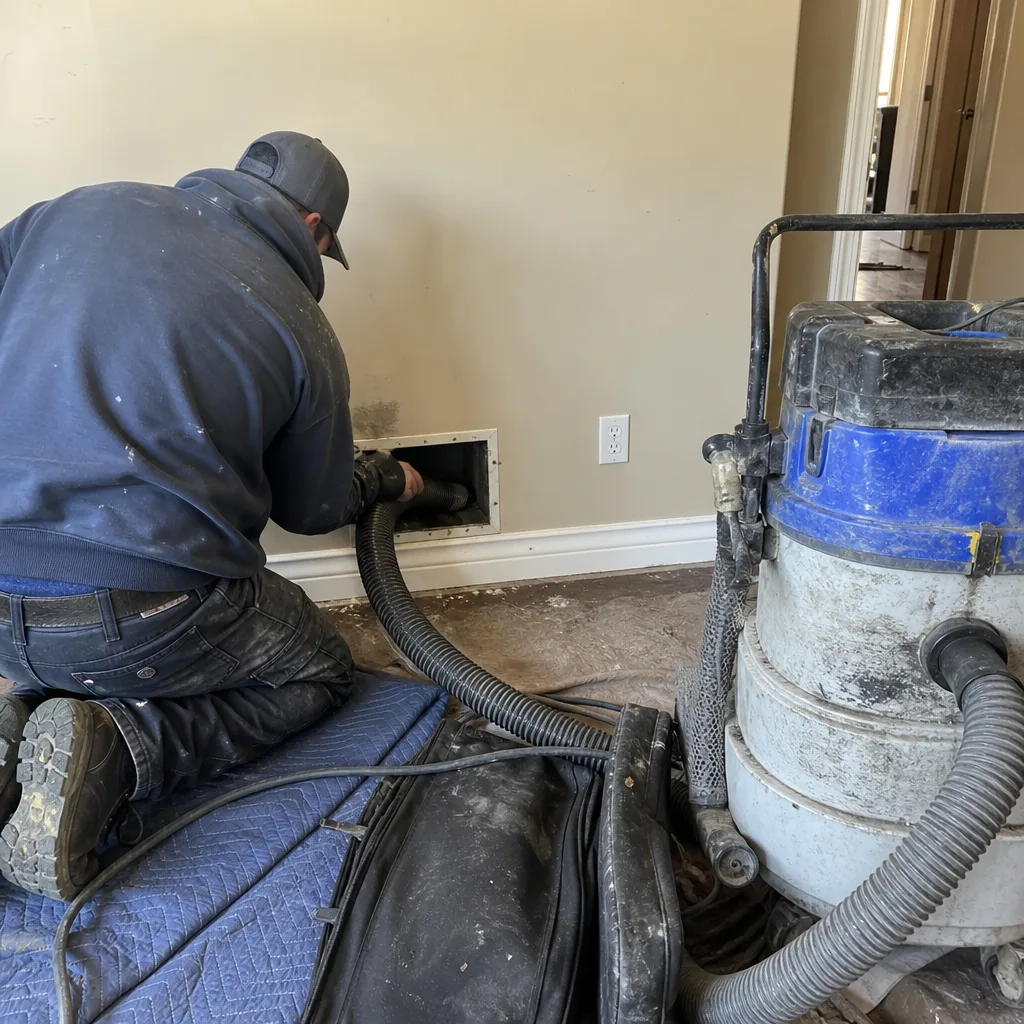 Before
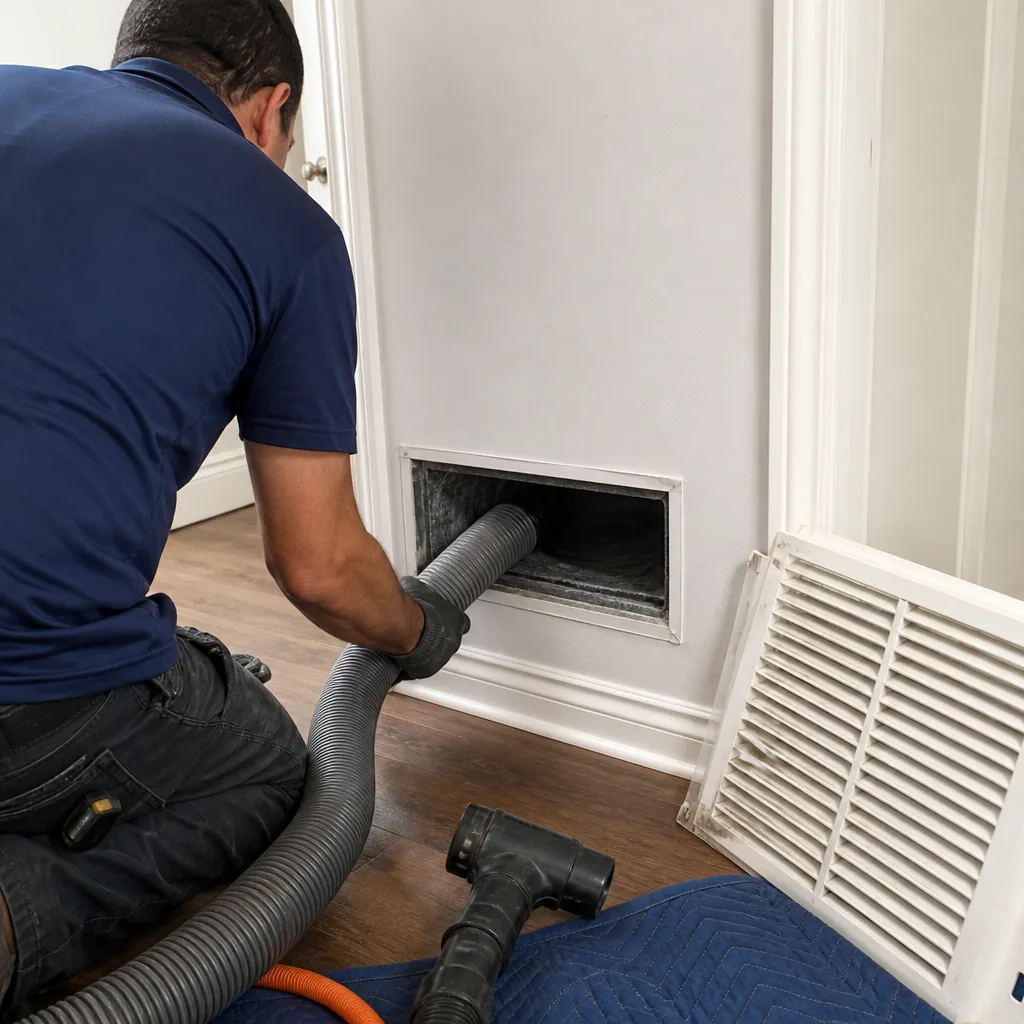 After
Common Mistakes to Avoid
- Hiring on price alone. A $199 whole-house duct cleaning special comes from companies that need to get in and out in under an hour. The math doesn’t support access panel installation, contact cleaning, or HEPA filtration at that price. You get what the economics allow.
- Accepting photos that could be from any house. Before-and-after photos should be location-labeled and clearly from your system. If the report doesn’t include identifiable locations, it’s not verification, it’s a performance.
- Skipping the inspection report review. If you don’t review the pre-cleaning findings, you won’t know whether the cleaning addressed the actual problems in your system. A thorough report tells you what was there and what was done about it.
- Treating duct cleaning as a standalone fix for every air quality complaint. Ducts are only part of the problem in many homes. If the house has a moisture issue, a filtration problem, or an undersized system, cleaning the ducts may not resolve the symptoms. A good inspection should point you toward the real causes.
- Assuming every company has equivalent equipment. A shop vac on a truck-mounted unit is not the equivalent of remediation-grade extraction. Ask what equipment the company uses. If they can’t name the specific brands and models, they’re not using professional-grade tools.
- Forgetting to address structural issues during a cleaning visit. If the technician finds collapsed flex duct or disconnected joints and tells you to call “someone else” for the repair, you’ve just paid for a cleaning that will last a few months. Find a company that can diagnose and fix in the same visit.
- Ignoring the dryer vent because it’s “not part of the HVAC system.” It’s a separate system with a separate risk profile, and the lint accumulation is a documented fire hazard. Get it inspected.
When to Call a Professional
If you are seeing dust discharge from supply registers, if surfaces in your home show visible dust accumulation within days of cleaning, if some rooms have always been under-conditioned and the registers deliver weak airflow, or if you have evidence of rodent activity in the attic or crawlspace, a professional inspection is warranted. The same applies after significant construction or after wildfire smoke events in the Camarillo area.
The inspection is the entry point. It tells you what’s actually in your ducts, what condition the ductwork itself is in, and whether cleaning is even the right service. Duct Cleaning Camarillo offers free estimates in Camarillo and serves the surrounding Ventura County area. Call (833) 593-6403 if you want someone to look at your system and tell you what’s actually there.
Frequently Asked Questions
Air Duct Cleaning services in Camarillo typically cost between $450 and $900 for a standard single-family home, depending on system size, access requirements, contamination level, and whether repair work is discovered. Homes with complex multi-zone systems or heavily contaminated ductwork can run higher. Call (833) 593-6403 for a specific quote based on your home’s configuration.
Duct cleaning is justified when you see visible dust discharge from supply registers, notice persistent dust accumulation within days of cleaning surfaces, find evidence of rodent activity in or around the ductwork, or have recently completed construction that generated significant dust. Symptoms like stale air when the system starts up or allergy symptoms that worsen at home can also point to duct contamination.
Quotes below about $300 for a full-system cleaning typically come from companies that skip access panel installation, don’t use contact-cleaning equipment, and don’t run HEPA-filtered extraction. The job gets done through register openings alone, which leaves the main trunk lines untouched and the debris intact. You’re paying less because less work is being done. Call (833) 593-6403 if you want a quote that reflects a full source-removal cleaning.
The EPA’s guidance says duct cleaning has not been proven to prevent health problems and should not be done routinely on a fixed schedule. But the EPA also says cleaning is appropriate when there is visible mold growth, rodent or insect infestation, or substantial debris accumulation that restricts airflow or discharges into the living space. The key is doing it when specific conditions justify it, not on an arbitrary calendar basis.
Ask for location-labeled before-and-after photos from the same duct sections, confirmation that access panels were installed to reach the main trunk lines, and documentation showing the equipment used. A proper post-cleaning report will show visible improvement in the same locations that were photographed during the pre-cleaning inspection. If the photos are generic or the before and after don’t match, the documentation isn’t verification.
Yes. The marine layer brings consistent morning humidity that settles into duct systems and bonds fine particles to duct walls. Once the moisture evaporates, the debris stays adhered and accumulates in layers. Inland cities like Moorpark and Fillmore have drier air that keeps debris loose and easier to remove. Camarillo’s humidity means duct debris here tends to require contact cleaning rather than air agitation alone.
It’s often practical to do both in the same visit because the technician is already at the home and the services share equipment infrastructure. But the services address different problems. Duct cleaning deals with HVAC air quality and airflow. Dryer vent cleaning deals with lint accumulation and fire risk. If you haven’t had either done recently, bundling them in one appointment saves a separate trip charge.
It can if the contractor uses equipment that’s too aggressive for the duct material. Flex duct has a thin inner liner that can tear under aggressive mechanical agitation. Rigid galvanized steel is durable and can handle standard contact cleaning. A professional will assess the material before selecting the brush type. Ask your contractor how they calibrate their approach for different duct types.
The Bottom Line
Duct cleaning is a tool, not a ritual. Used at the right time with the right equipment, it removes accumulated debris that your HVAC system is otherwise recirculating. Used on a marketing calendar, it’s an expense without a purpose. The Camarillo-specific factors worth remembering are marine layer humidity, eucalyptus particulate, wildfire ash exposure, and aging flex duct in attic spaces. When you do schedule service, verify the method, the equipment, and the documentation. A proper source-removal cleaning leaves you with visible evidence, not just a receipt. And if the inspection finds structural problems, those need to be fixed in the same visit, not deferred to another contractor. For related reading, browse our more guides & resources on indoor air quality.
Written by the team at Duct Cleaning Camarillo, serving Camarillo, CA since 2013.