
Last updated November 2, 2026
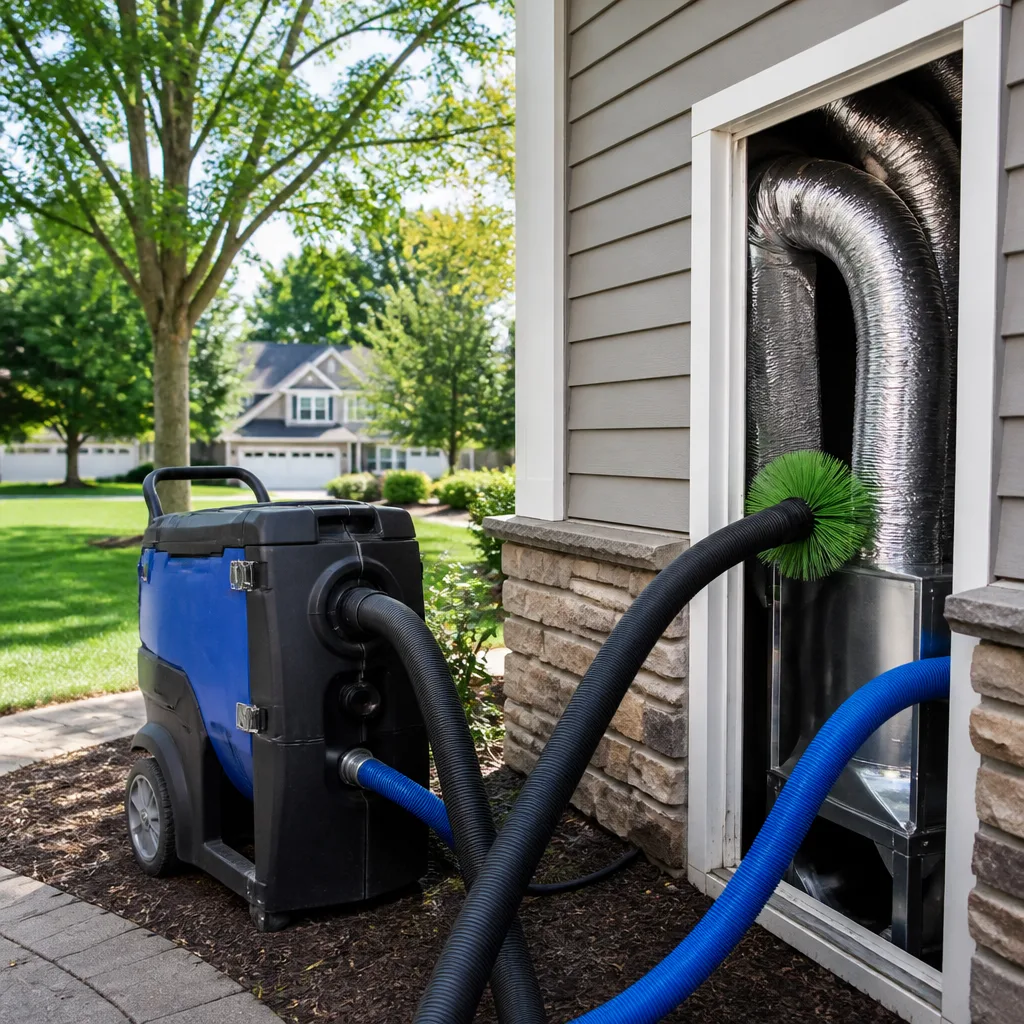 Whole-home duct cleaning
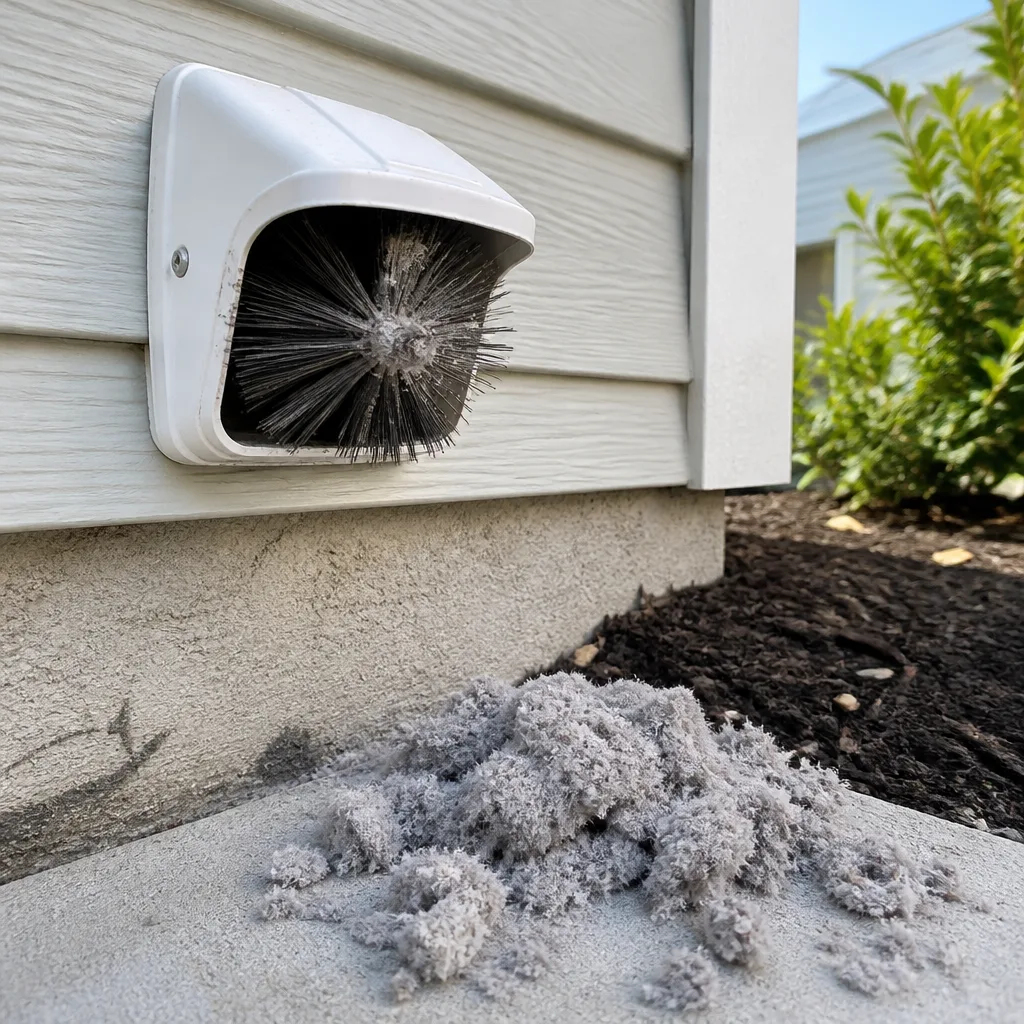 Dryer vent cleaning
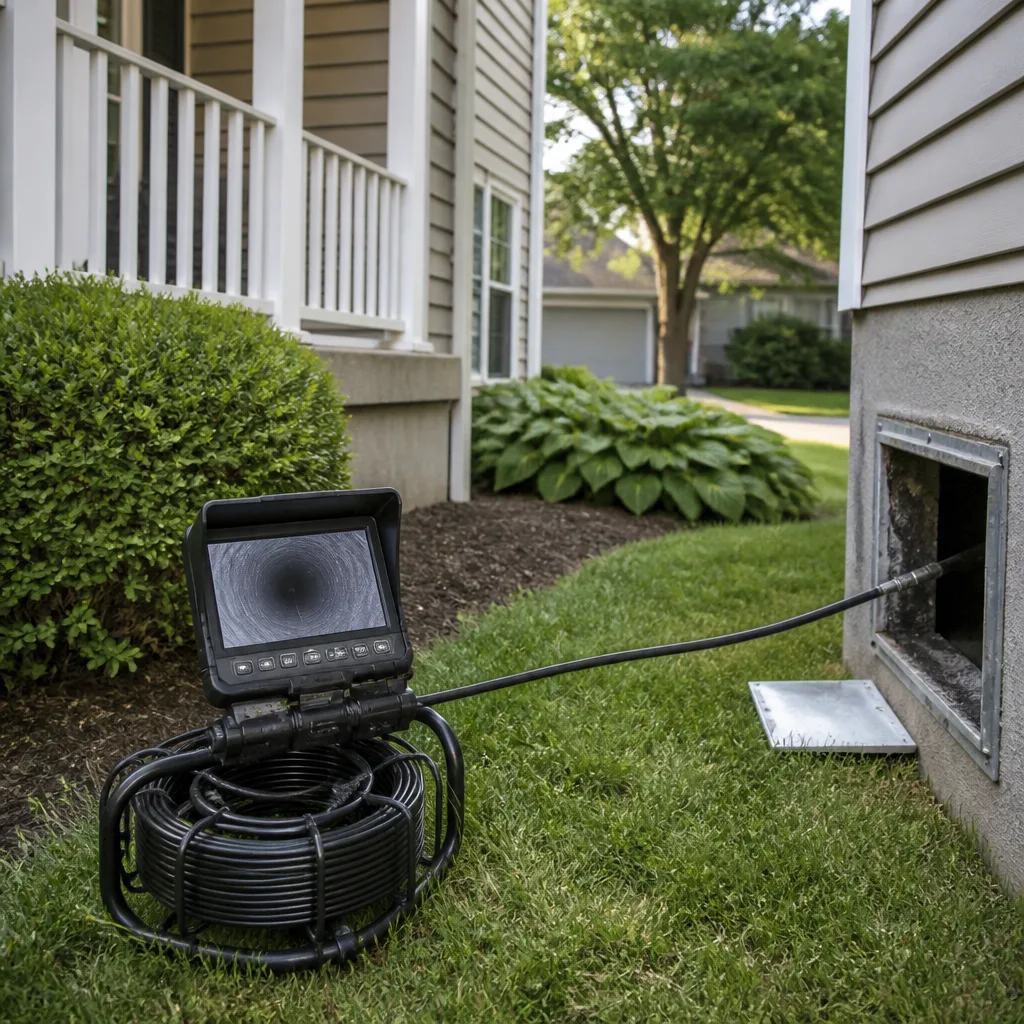 Camera inspection
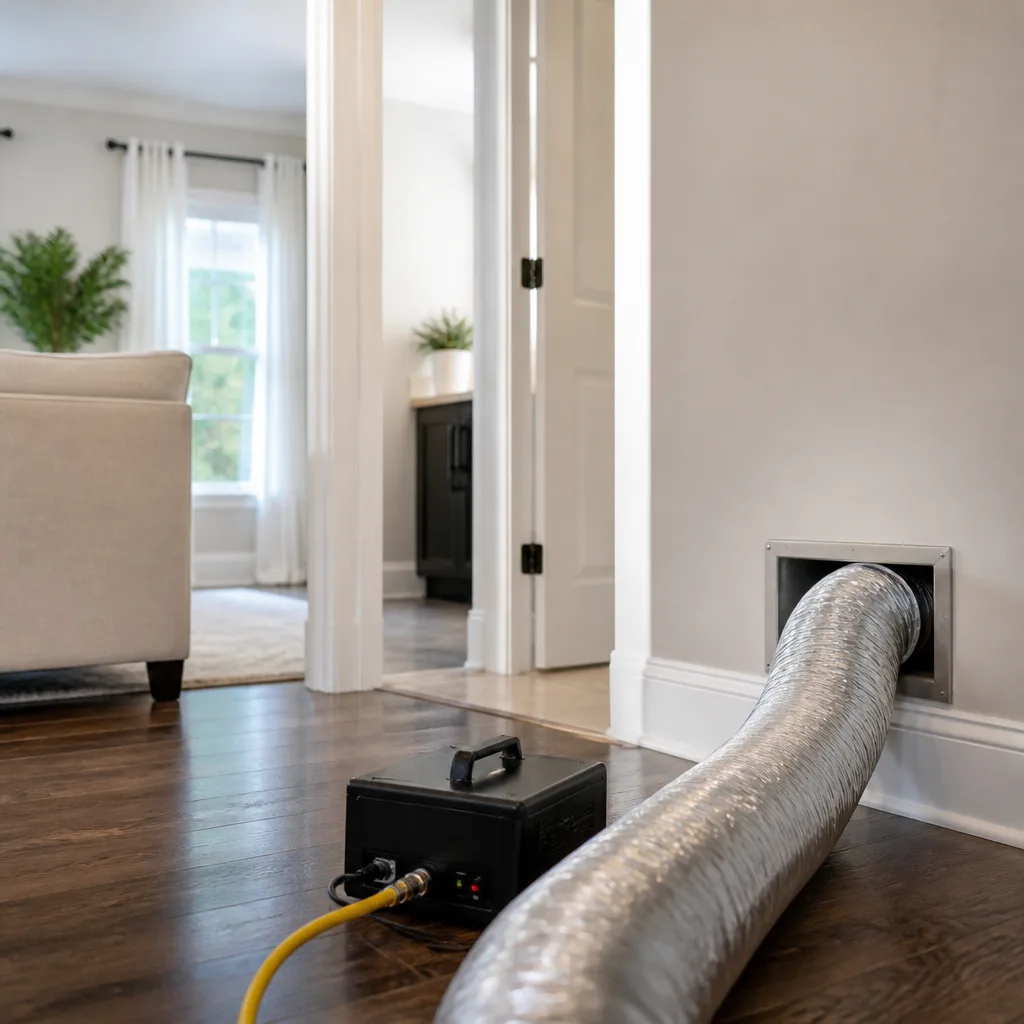 Sanitizing & deodorizing
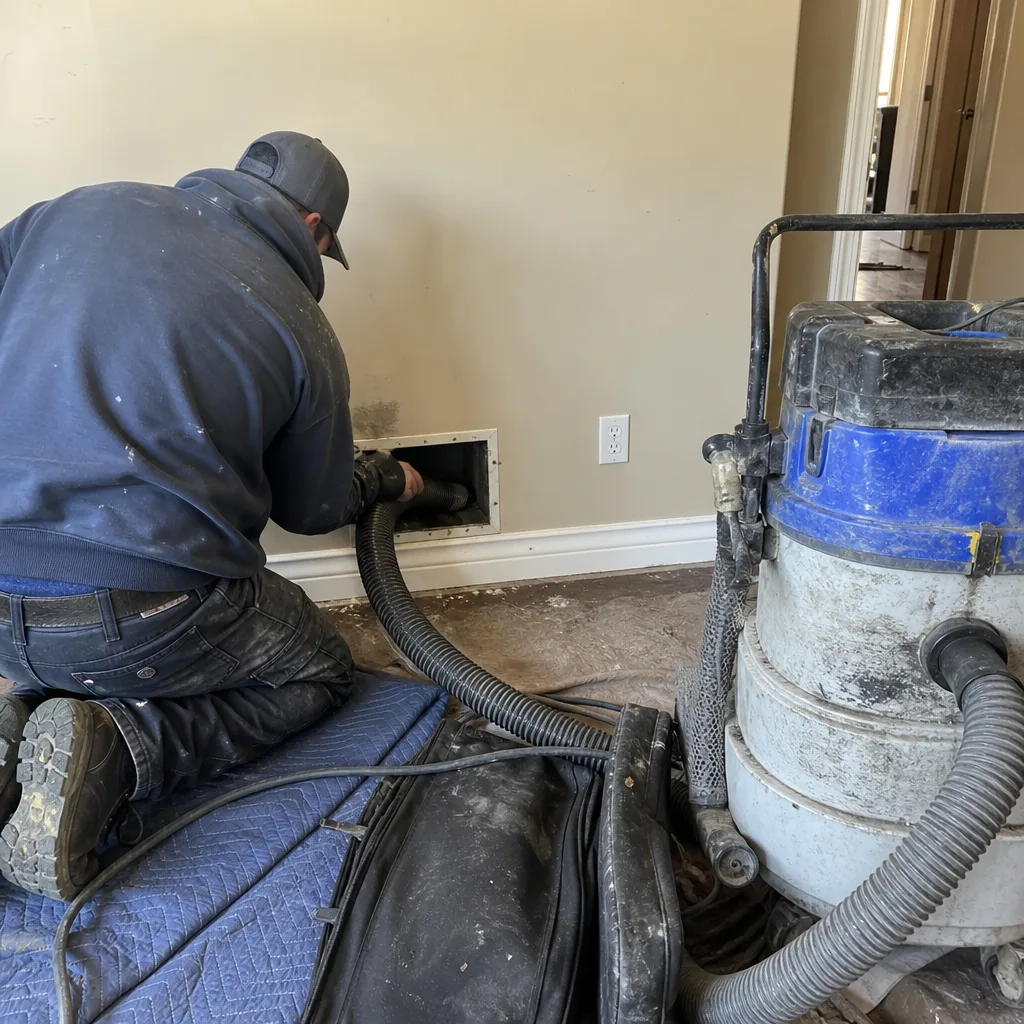
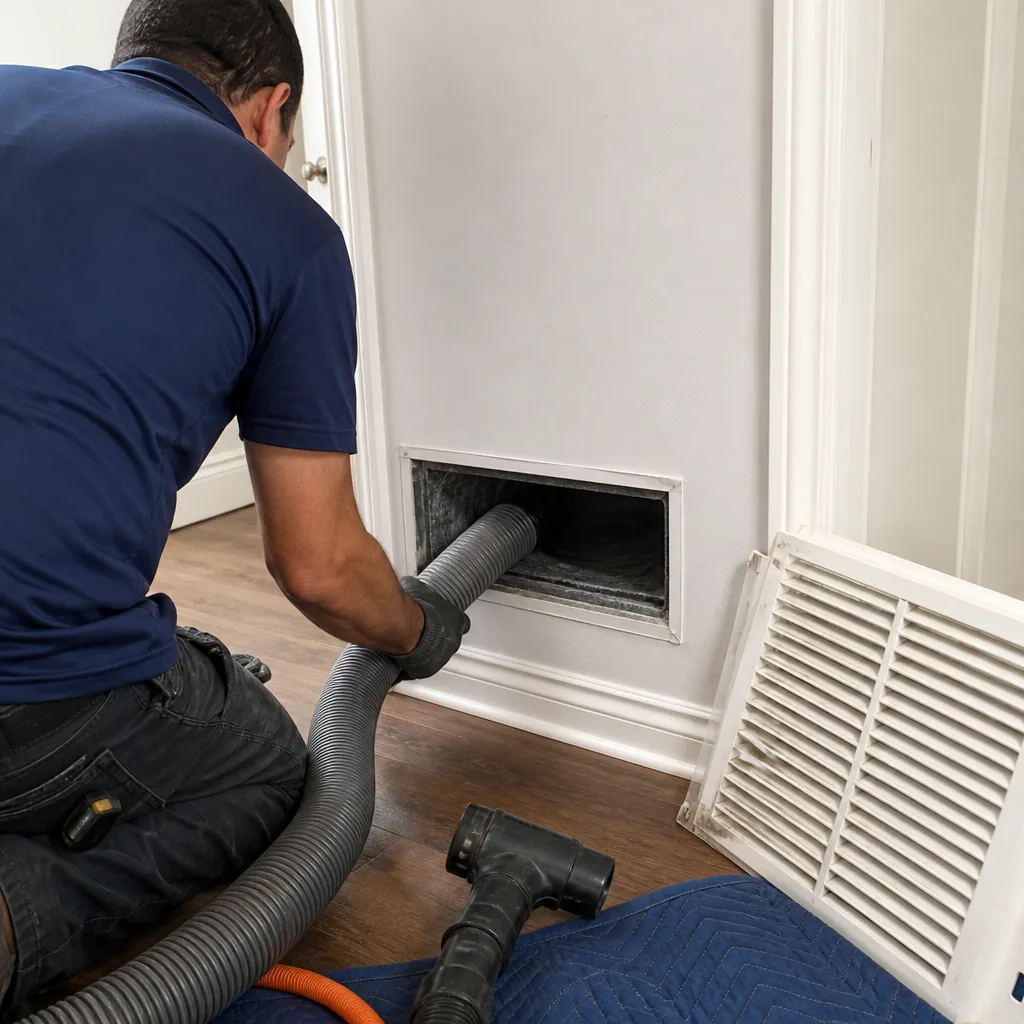
Whole-system duct and dryer vent check with before-and-after photos - you see exactly what came out of your vents
That "$99 whole-house special" is a bait ad - the real number appears once they are in your hallway, or the "clean" is a shop-vac at the register. We photograph the inside of your ducts before and after instead.
Air Duct Cleaning Emergency Preparedness Guide for Camarillo Homes
The 2018 Woolsey Fire burned nearly 97,000 acres across Ventura and Los Angeles Counties, and in the weeks that followed, air quality testing inside Camarillo homes told a story the outdoor air monitors missed. Particulate from wildfire smoke had settled deep into residential duct systems, and it stayed there. Homeowners kept running their HVAC units, unaware that return-air pathways had pulled smoke into the ductwork during the event and that every subsequent cycle was recirculating that particulate through bedrooms and living rooms. Outdoor air cleared within days. Indoor air stayed contaminated for weeks, sometimes months. This guide covers what Camarillo homeowners should do in the first 48 hours after a smoke, ash, or flood event, how to assess whether their ducts were compromised, and what an Air Duct Cleaning emergency response actually involves.
Styles & brands we work with
- Whole-home duct cleaning
- Dryer vent cleaning
- Camera inspection
- Sanitizing & deodorizing
Quick Answer
After a wildfire smoke event, ash fall, or flood in Camarillo, shut your HVAC system down immediately if you suspect contamination, then call a duct specialist before restarting it. Contaminated ducts recirculate wildfire particulate, mold spores, and debris throughout the home every time the blower runs. The first 48 to 72 hours are critical: post-flood humidity can initiate mold colonization in flex duct within that window, and smoke particulate bonds to dust and debris already inside the duct walls. A professional emergency duct cleaning using HEPA-rated containment equipment removes the contaminant at the source instead of pushing it back into living spaces.
Table of Contents
- Immediate Steps After a Smoke or Ash Event
- How to Assess Whether Your Ducts Were Compromised
- Post-Flood and High-Humidity Events: The 48 – 72 Hour Mold Window
- What Emergency Duct Cleaning Involves vs. Standard Cleaning
- Building a Camarillo-Specific Emergency Kit
- Insurance Claims and Documentation for Duct Contamination
- Common Mistakes to Avoid
- When to Call a Professional
- Frequently Asked Questions
- The Bottom Line
Immediate Steps After a Smoke or Ash Event
When wildfire smoke or ash reaches Camarillo, your first decision about your HVAC system matters more than anything you do afterward. The mistake most homeowners make is intuitive but wrong: they turn the fan to “on” or keep the system running to “filter the air.” That approach assumes the contamination is outside the system. If smoke has already been pulled into the return side, running the blower actively distributes particulate throughout the entire duct network and into every room.
Here is what to do, in order, within the first hours of a smoke or ash event in Camarillo:
- Shut the HVAC system down completely. Switch the thermostat to “off,” not “fan on.” If your system has a separate breaker for the air handler, flip it. This stops the blower from pulling residual smoke into the return plenum and pushing it through supply runs.
- Close all windows and exterior doors. If outdoor smoke is still present, you want to minimize the volume of contaminated air entering the home. This is especially important in Camarillo neighborhoods like Spanish Hills and Santa Rosa Valley, where Santa Ana winds can drive smoke hard against west-facing walls and exterior vents.
- Remove and bag the existing HVAC filter. Turn the power off first, then slide the filter out. Place it in a sealed plastic bag. This filter is now evidence: its color and loading tell you how much particulate the system pulled in. Do not throw it away until you’ve documented it with photos.
- Do not run portable fans, window AC units, or the central system to “clear it out.” Agitating air inside the home just keeps particulate airborne longer. Leave everything off until you’ve assessed whether the ducts themselves were contaminated.
- Seal the return registers temporarily. If the house is going to sit for more than a few hours before a professional can inspect it, cover return grilles with plastic sheeting and painter’s tape. This is not a permanent fix. It reduces passive settling of airborne particulate into the return duct openings.
What not to do is just as important. Do not open the air handler cabinet yourself. Do not spray water or cleaning products into registers. Do not run a shop vac into a supply vent from inside the room. These actions can dislodge settled particulate and push it deeper into the duct system, or damage internal components like the evaporator coil or blower wheel.
How to Assess Whether Your Ducts Were Compromised
Not every smoke event means your ducts need emergency cleaning. A brief smell of smoke in the air that clears within hours, with the HVAC off the entire time, is different from a multi-day smoke siege where the system ran continuously. You need a way to determine whether the contamination actually entered the ductwork, and how deep it went.
In our experience with Camarillo homes, three indicators tell us the most before we even open a register:
- Filter color and loading. A filter that was clean before the event and now shows gray, brown, or black discoloration, especially with visible ash flecks, means the return side pulled contaminated air through the system. Hold the filter up to a light. If you can’t see through the media anymore, the system processed a significant particulate load. High-MERV filters capture more fine smoke particulate, which also means they load faster and darken more dramatically. A MERV 11 or 13 filter from Honeywell or Aprilaire can look nearly black after a single serious smoke day.
- Register deposits. Look closely at the fins of each supply register. Ash and smoke particulate that made it through the filter or bypassed it around a poorly sealed filter slot will deposit on register surfaces as a fine gray film. Wipe a white paper towel across the top of a supply register. If it comes away gray or brown, the particulate moved past the filter and into the supply side.
- Odor persistence. Smoke odor that lingers in the home for more than 48 hours after outdoor air has cleared, and gets stronger when the system runs, is a reliable sign that particulate has settled on duct walls, the blower wheel, or the coil. If the odor is present when the system is off but noticeably stronger when the blower cycles, the source is inside the ductwork, not in furniture or fabrics.
One more check applies to ash fall specifically. Ash is heavier than smoke particulate and settles quickly. Walk the perimeter of your home and check around exterior penetrations: the fresh-air intake, the exhaust vents for bathrooms and the kitchen, and the outdoor condenser unit. If ash accumulated around the condenser coil, it did not enter the ductwork directly, but it reduced the system’s ability to shed heat and pushed the unit to run longer and harder throughout the event, which increases the volume of air pulled through the return side. A clogged outdoor coil after an ash event should be rinsed by a professional, not hosed from a ladder by a homeowner.
Camarillo’s geography matters here. Homes in the Las Posas corridor and along the 101 sit in a natural wind channel. When Santa Ana conditions push smoke from fires to the north and east, those neighborhoods see sustained exposure that lasts 24 to 72 hours. Homes in Mission Oaks, further from the freeway but closer to open hillside, get more ash fall and less sustained smoke. The type of contamination, not just the amount, changes what the duct cleaning has to accomplish, as outlined in our Air Duct Cleaning Maintenance Checklist for Camarillo Homeowners.
Post-Flood and High-Humidity Events: The 48 – 72 Hour Mold Window
Wildfire smoke is not the only contamination event that affects Camarillo duct systems. Winter storm systems that drop several inches of rain in a short window are becoming more common, and when drainage fails or a roof leak develops, water can enter the ductwork. Flex duct, which is common in many Camarillo homes built in the 1980s and 1990s, has a particular vulnerability: its inner liner is a porous surface that traps organic dust, and once that dust gets wet, mold colonization can begin within 48 to 72 hours.
The timeline is not an estimate. Mold spores that are already present in the duct environment germinate quickly when relative humidity inside the duct exceeds 70 percent and organic material, dust, skin cells, pet dander, is available as a food source. Once colonization starts, it spreads through the duct lining and can persist even after the visible moisture is gone.
What you can do before a professional arrives:
- Stop the water source first. If a roof leak, plumbing leak, or flood entry is the cause, address it before anything else. Duct cleaning performed while water is still entering the system is wasted effort.
- Shut down the HVAC and do not restart it. Running the blower through a wet duct distributes moisture and spores into every room. It also coats the blower wheel and coil with damp particulate that becomes a secondary contamination site.
- Reduce indoor humidity aggressively. Run standalone dehumidifiers in affected rooms. Target 50 percent relative humidity or lower. In winter months, when Camarillo coastal fog and rain combine, a portable dehumidifier can pull several gallons per day from a single room.
- Do not open wet duct sections yourself. Flex duct that has been saturated loses structural integrity. Insight from our Air Duct Repair in Camarillo work is that homeowners who pull back insulation to “let it dry” often tear the inner liner and make the section unrepairable. Leave the duct intact and let a technician assess it.
- Document everything with photos. Water staining on ceilings, visible water in register boots, damp insulation around duct runs in the attic. Insurance adjusters respond to dated photographs, and they are especially relevant when a claim involves duct replacement or heavy cleaning under a water damage policy.
Abatement Technologies equipment matters in these situations. The company is known for remediation-grade containment tools used in professional mold and asbestos abatement. The same negative-air containment approach applies to post-flood ductwork: the affected zone is isolated, HEPA-filtered negative air is established, and contaminated material is removed without cross-contaminating clean areas of the home. That level of containment is not available from a crew running a rotating brush and a standard vacuum.
What Emergency Duct Cleaning Involves vs. Standard Cleaning
Standard Air Duct Cleaning in Camarillo is a maintenance procedure: remove accumulated dust and debris, restore airflow, document the condition of the duct interior. Emergency duct cleaning is a contamination response. The difference shows up in the equipment, the sequence of work, and the documentation provided at the end.
A standard cleaning typically involves contact cleaning with a Rotobrush system that physically agitates debris from duct walls while simultaneous vacuuming removes it. That same contact-based approach is used in emergency response, but the setup changes. The vacuum side is connected to HEPA-rated filtration, which captures fine particulate instead of exhausting it back into the living space. This matters when the contaminant is wildfire smoke residue, which is predominately sub-micron particulate that standard filtration cannot effectively capture.
An emergency duct cleaning response for a Camarillo home after a smoke or moisture event generally follows this sequence:
- Initial assessment and containment setup. The technician inspects the duct system, identifies the contaminated zones, and establishes negative air in the work area before opening any access points. This prevents particulate from migrating into rooms that were not directly affected.
- Contact cleaning of supply and return runs. Rotobrush contact-cleaning tools physically brush the interior walls of the ductwork while vacuuming simultaneously. For smoke-affected systems, this step removes the waxy, sticky residue that smoke particulate forms when it bonds with existing dust and oils on duct surfaces. Air-agitation methods alone do not reliably remove this residue, which is why contact cleaning is the standard for contamination work.
- Component cleaning: coil, blower, plenums. The evaporator coil and blower wheel hold a disproportionate share of the contamination load because they run constantly during the event. These components are cleaned separately with coil-specific cleaning agents, not the same tools used on the duct runs.
- HEPA vacuum pass and capture. Nikro HEPA-rated vacuum equipment is used for the final capture pass. The Nikro equipment captures fine particulates dislodged during cleaning at the source, preventing them from recirculating into living spaces. If the homeowner has a Honeywell or Aprilaire whole-home air quality system installed, the technician may recommend filter replacement or media upgrade at this stage.
- Post-cleaning verification. The technician does a visual inspection of each register and access point, checks for remaining odors in the system, and documents the work. Photographs of before-and-after duct surfaces are standard. The technician also checks whether the contamination revealed structural problems, disconnected joints, torn flex, collapsed sections, that would normally go unnoticed. Those are repair issues, and they fall under air duct repair services rather than cleaning.
The equipment difference is not cosmetic. A Nikro HEPA vacuum captures at a much higher efficiency rating than a standard shop-vac fitted to a duct cleaning rig. The distinction is especially important in a post-fire scenario, where the contaminant includes particulate that came from burned structures, paint, plastics, treated lumber, not just brush and trees. That particulate carries compounds that make it chemically different from ordinary household dust, and standard filtration is not sufficient.
Building a Camarillo-Specific Emergency Kit
Every Camarillo homeowner should have a small, dedicated kit for HVAC emergencies, just as they keep a go-bag for evacuations. Both are part of living in a fire-prone region with Santa Ana wind events. The kit does not replace professional service; it buys you the hours between the event and the technician’s arrival, and it prevents mistakes that make contamination worse.
What to include:
- Spare high-MERV filters, at least two. A MERV 11 or 13 filter with adequate pleat depth captures significantly more smoke particulate than the standard MERV 8 fiberglass filters many homes run. Aprilaire and Honeywell both manufacture high-MERV residential filters that fit most standard filter slots. Store them sealed in plastic so they are not absorbing household dust before you need them. After a smoke event, you will likely replace the filter twice: once immediately after cleaning, and again 30 days later as the system finishes flushing residual particulate.
- Plastic sheeting and painter’s tape. One roll of 4-mil plastic sheeting and one roll of painter’s tape are enough to seal return registers in a pinch, cover supply registers in rooms you are keeping closed, and isolate a section of the home if you need to run a portable air purifier in one room only.
- HVAC shutoff location, written down and taped inside the breaker panel door. Most Camarillo homes have the air handler breaker labeled, but in a hurry, under evacuation stress, labels get missed. A piece of painter’s tape on the breaker with “HVAC OFF” written in marker takes five seconds and prevents keeping the system running during an ash fall because no one could find the right breaker.
- A pre-vetted duct cleaning contractor’s number. Store it in your phone, and write it on the paper inside the kit. In the aftermath of a regional fire event, reputable duct cleaning companies book out quickly. Having a relationship already, or at least a number on hand for Duct Cleaning Camarillo home services, means you are calling on day one rather than day nine. The difference between a system that gets cleaned 48 hours after contamination and one that waits three weeks is substantial in terms of continued exposure.
- A photo documentation habit. Not an item, but a practice: photograph your filter before and after any smoke event, photograph register surfaces, photograph visible water staining. These images support insurance claims and help a technician understand what the system was exposed to before they open it up.
This kit sits in a sealed plastic bin on a shelf in the garage or laundry room. It takes 20 minutes to assemble and costs less than replacing a smoke-contaminated filter after every event because you ran out and had to use whatever MERV 4 fiberglass filter was on the shelf at the hardware store at 9 p.m. during a fire watch.
Insurance Claims and Documentation for Duct Contamination
Camarillo homeowners sometimes discover that their standard homeowner’s policy covers duct cleaning after a covered event, but the claim requires documentation that most people do not know to collect. The insurance company’s usual position is that duct cleaning is maintenance, and routine maintenance is not covered. The counterargument is that the contamination resulted from a specific, covered event: a wildfire smoke exposure, a roof leak, a flood from a burst pipe. See our Air Duct Cleaning Permits, Codes & Inspections in CA: What You Need to Know for regulatory context. That argument only works with evidence.
What supports a claim:
- Dated photographs of the filter before the event and after. The “before” photo matters as much as the “after” one, but almost no one has it. If you replace filters on a schedule, snap a phone photo of the new filter next to a calendar or newspaper, then file it. This is the simplest piece of documentary evidence that turns a denied claim into an approved one.
- Air quality reports or local fire advisories from the dates of the event. Ventura County publishes air quality data during fire events. Screenshot it. The date-stamped advisory showing “unhealthy” or “hazardous” air quality in Camarillo on the days your system was running is directly relevant.
- Post-cleaning documentation from your duct contractor. A professional emergency cleaning should include before-and-after photos of the duct interior, written observations of the contamination found, and a service record that states the cleaning was performed as a contamination response, not routine maintenance. If your technician found visible ash, smoke residue, or mold-affected surfaces, that notation belongs on the invoice and in the report.
- Repair estimates for any damage found. If the event revealed separated duct joints, torn flex, or a blower wheel coated in sticky residue that could not be cleaned and must be replaced, that repair estimate is a covered part of the same claim in many cases.
We have seen Camarillo homeowners successfully claim duct cleaning after the Woolsey Fire, and successfully claim duct replacement after winter storm flooding. The ones who got paid had photographs and a written report that named the contaminant and the date. The ones who got denied had a receipt that said “duct cleaning” and nothing else. The documentation is the difference.
Common Mistakes to Avoid
- Running the HVAC to “clear out” smoke. This is the single most damaging mistake. The blower pulls ambient smoke into the return side and distributes it through every supply run. The same impulse after a dust or ash event spreads contamination that would otherwise have settled and been cleaned, not circulated. Shut the system off first, assess later.
- Replacing the filter and calling it done. The filter captures what passes through it. It does not clean what has already deposited on duct walls, the coil, or the blower wheel. A new filter in a contaminated system just means the circulating particulate keeps moving until the filter loads up again. The duct interior was the destination, not the filter rack.
- Hosing off an ash-covered condenser from a ladder. Target: make a note that this is a dangerous assumption. The condenser coil is delicate, and a garden hose at full pressure can bend fins and drive ash deeper into the coil. A professional coil rinse is a quick, inexpensive service that protects a multi-thousand-dollar system. Climbing a ladder with a hose in your hand during cleanup after a fire event is not worth the emergency room visit.
- Waiting “a few weeks to see if the smell goes away.” It usually does not, and the delay allows smoke residue to bond further with duct surfaces and the coil. Waiting also moves you from a contamination response, which is faster to resolve, into a deep remediation that requires more equipment and more time. Call in the first week, not the first month.
- Using a bargain duct cleaning outfit after a contamination event. A $99 whole-house special uses air-agitation methods and a standard vacuum with no HEPA filtration. That approach makes smoke contamination worse by knocking fine particulate loose without capturing it. After a smoke or flood event, the equipment standard matters more than the price. Remediation-grade equipment with true HEPA capture is the difference between a resolved contamination and one that is now evenly distributed through every room.
- Ignoring the dryer vent after a smoke or ash event. The Dryer Vent Cleaning in Camarillo connection is easy to miss. Ash fall settles on exterior dryer vent terminations and gets pulled into the vent run during dryer cycles. A lint load that would have been a routine cleaning turns into a compacted, ash-laden blockage that restricts airflow and raises the fire risk inside the vent. Any post-event duct response should include a dryer vent check.
- Forgetting that flex duct holds moisture differently than sheet metal. Sheet metal ductwork dries. Flex duct absorbs. After a flood or roof leak, a section of flex duct that got wet needs professional evaluation even if the visible water is gone. The inner liner can stay damp for days, and the 48 – 72 hour mold clock started the moment the water entered.
When to Call a Professional
Call a professional if the filter is blackened with ash or smoke residue. Call if registers show gray particulate deposits. Call if the smoke odor persists more than 48 hours after outdoor air has cleared. Call if water entered the ductwork from any source: roof leak, plumbing failure, flood, or a saturated crawlspace or attic. Call if you have already made the mistake of running the system through a smoke event. Call before you restart the HVAC after any significant contamination event, because every cycle after that point expands the contaminated area. Duct Cleaning Camarillo offers free estimates in Camarillo, call (833) 593-6403.
Frequently Asked Questions
Within the first 7 to 10 days after the event if the system was running during smoke exposure. The residue from wildfire smoke bonds with duct surfaces over time, and the longer it sits, the harder it is to remove completely. If the system stayed off during the entire smoke event and the filter remained clean, a standard cleaning on your regular schedule may be sufficient. Call (833) 593-6403 and describe what your system experienced, and we can help you determine whether an emergency response is warranted.
Only partially. A high-MERV filter from Honeywell or Aprilaire captures a meaningful share of smoke particulate, but it cannot capture everything, and it only works on air that passes through the filter. Smoke that enters through leaks in the return duct, gaps around the filter slot, or when the system cycles off bypasses the filter entirely. The duct walls themselves are downwind of the filter in many systems, particularly older Camarillo homes with unsealed return plenums.
Emergency duct cleaning in Camarillo typically runs higher than a standard maintenance clean because of the HEPA containment setup, the additional pass time on residue-heavy surfaces, and the component cleaning for the coil and blower. Whole-system emergency response pricing generally falls in the range of a few hundred to over a thousand dollars depending on home size, system configuration, and the extent of contamination. The estimate should be a flat price per system, agreed before work starts. Call (833) 593-6403 for an exact quote based on your home.
Most of the time, no. Smoke residue can be removed with contact cleaning and HEPA capture in the majority of residential systems. Duct replacement becomes necessary when the contamination involved water as well as smoke, or when the ductwork was already failing structurally before the event. If the post-cleaning inspection reveals torn flex, collapsed sections, or joints that have separated, those specific sections may need repair or replacement.
Mold colonization in flex duct can begin within 48 to 72 hours of moisture exposure, especially when the duct liner has an existing organic dust load. The clock starts when water enters the duct, not when you discover it. If you suspect water entered your ductwork, shut the system down, run dehumidifiers in the affected area, and call for an inspection immediately.
In many cases, yes, if the contamination can be tied to a specific covered event and documented properly. Photographs of the filter before and after, screenshots of local air quality advisories, and a written post-cleaning report that names the contaminant all strengthen a claim. The claim is typically filed under the smoke damage or water damage provisions of your policy. Call (833) 593-6403 to discuss what documentation you need from us.
Shut the system off and do not run it again until it has been inspected. A smoke odor that appears only when the HVAC runs means the source is inside the duct system, most likely on the coil or the blower wheel. Every cycle redistributes residual smoke particulate through the home and makes the eventual cleaning more involved.
The Bottom Line
Wildfire smoke, ash fall, and post-flood humidity in Camarillo are not hypothetical scenarios. They are recurring environmental events, and they have a direct path into your home through the HVAC system. The first 48 hours after a contamination event decide whether the problem is a cleanable residue or a deeper contamination that spreads every day the system runs. Shut the system down, assess the filter and registers, document everything, and call a specialist who uses HEPA-rated containment equipment rather than a bargain crew with a rotating brush. For additional preparation tips, explore our more guides & resources. A duct system that gets the right response in the first week after an event returns to clean, efficient operation. One that waits a month becomes a much more expensive problem.
Written by the team at Duct Cleaning Camarillo, serving Camarillo since 2013.
See the difference
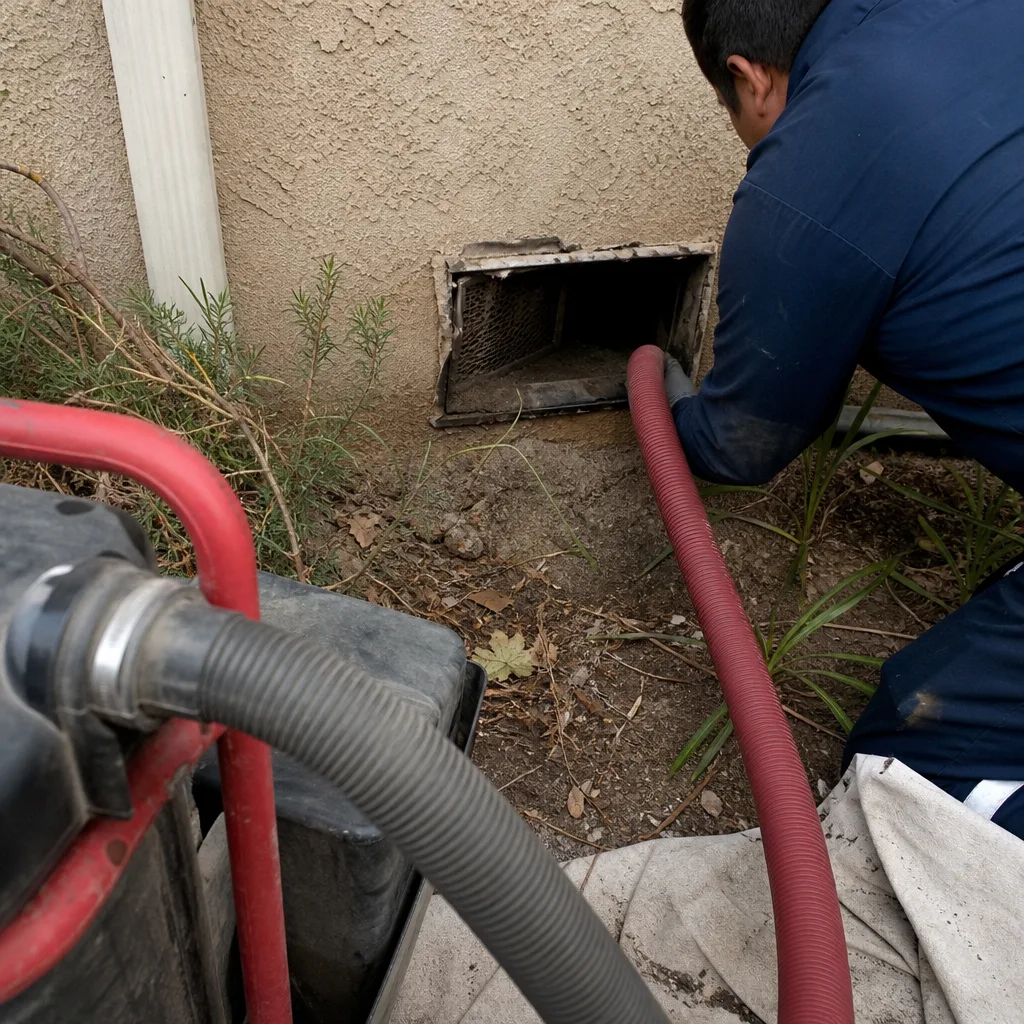 Before
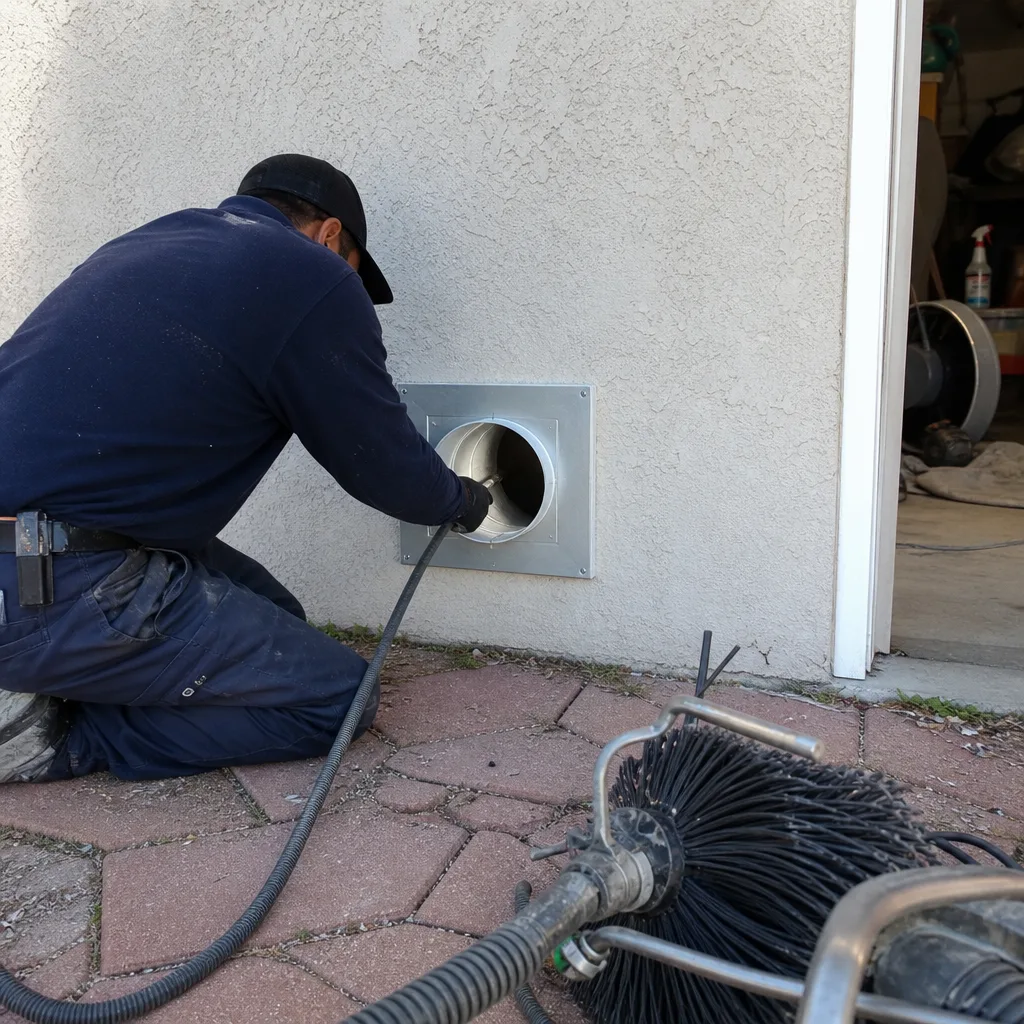 After
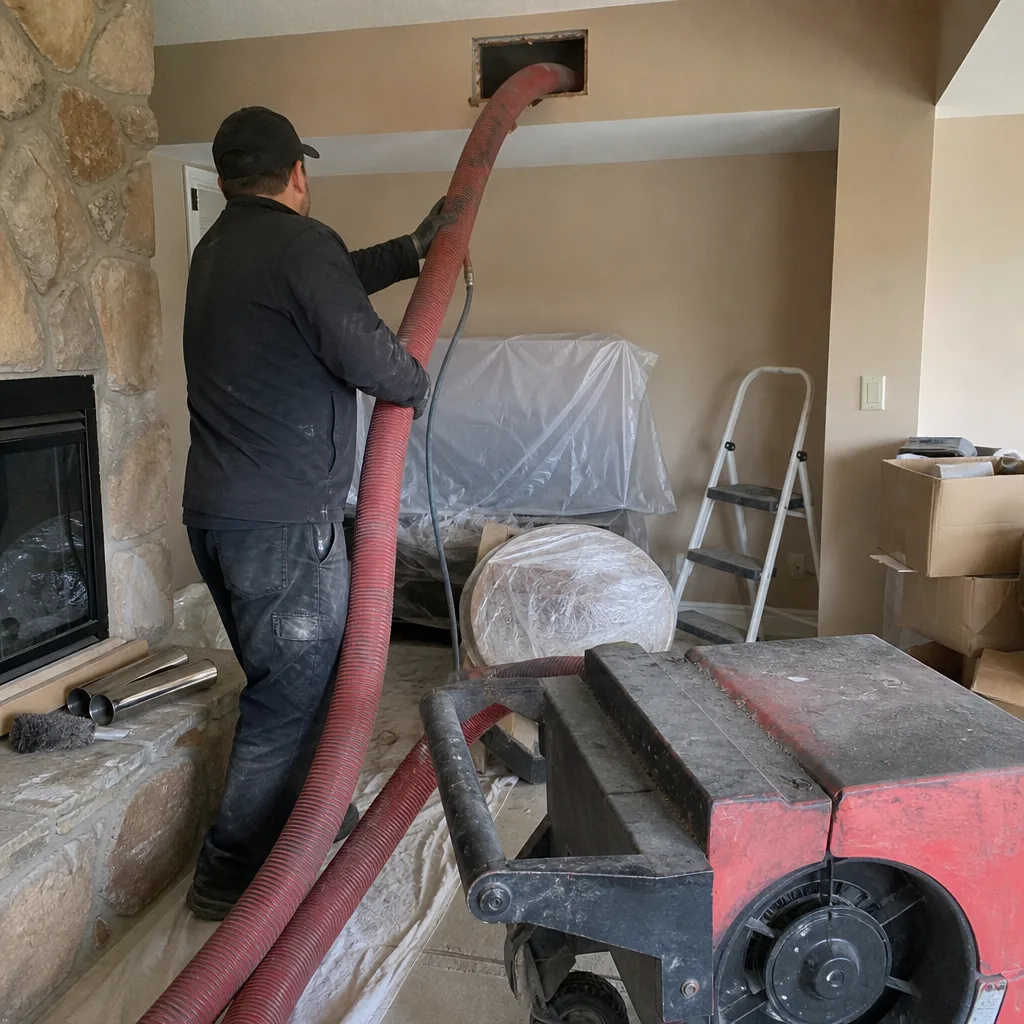 Before
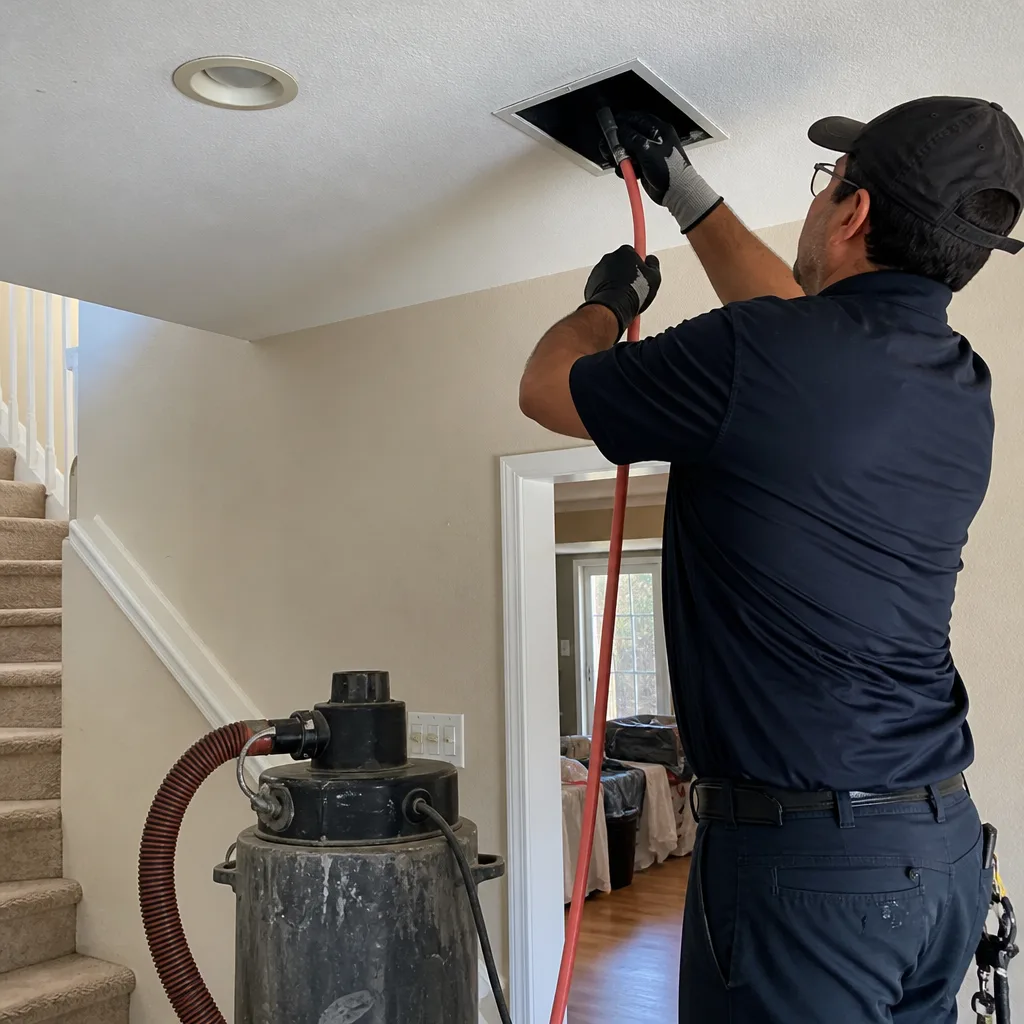 After
 Before
 After