
Last updated November 2, 2026
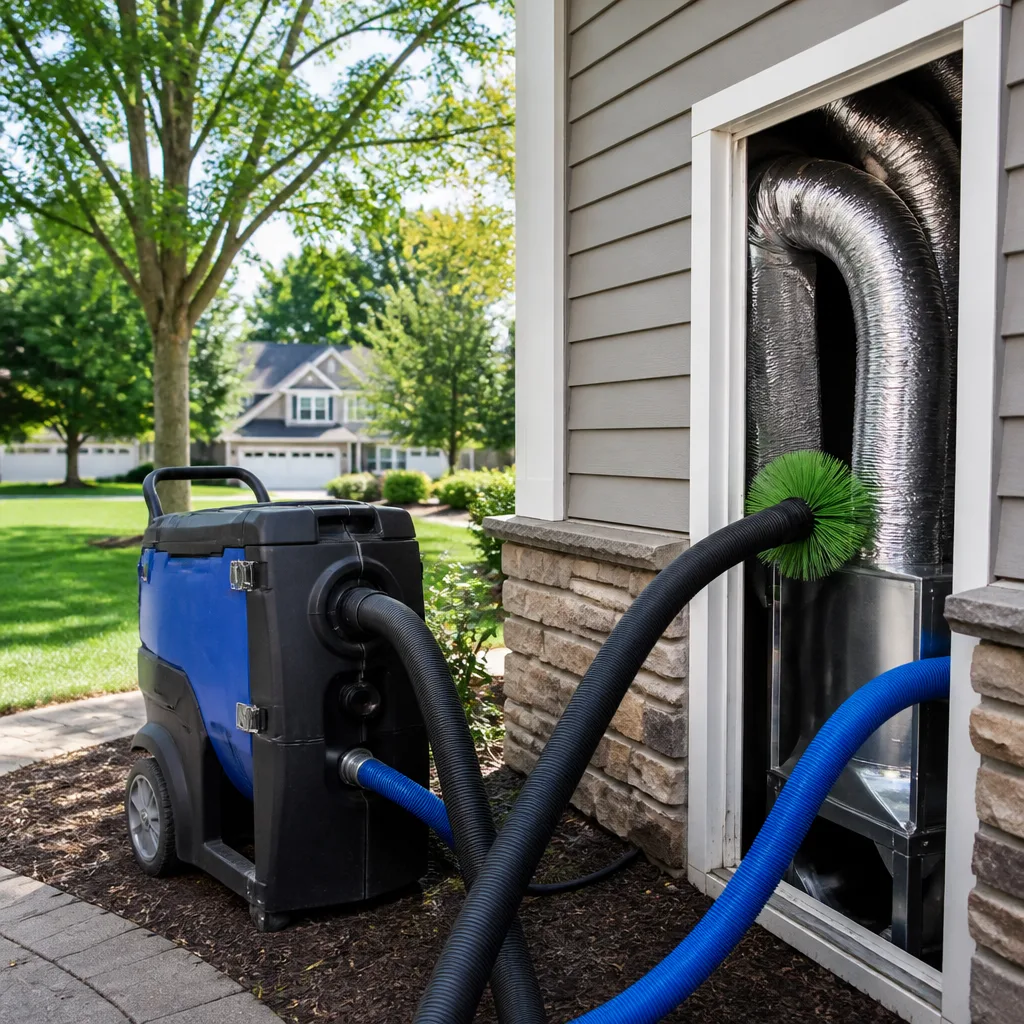 Whole-home duct cleaning
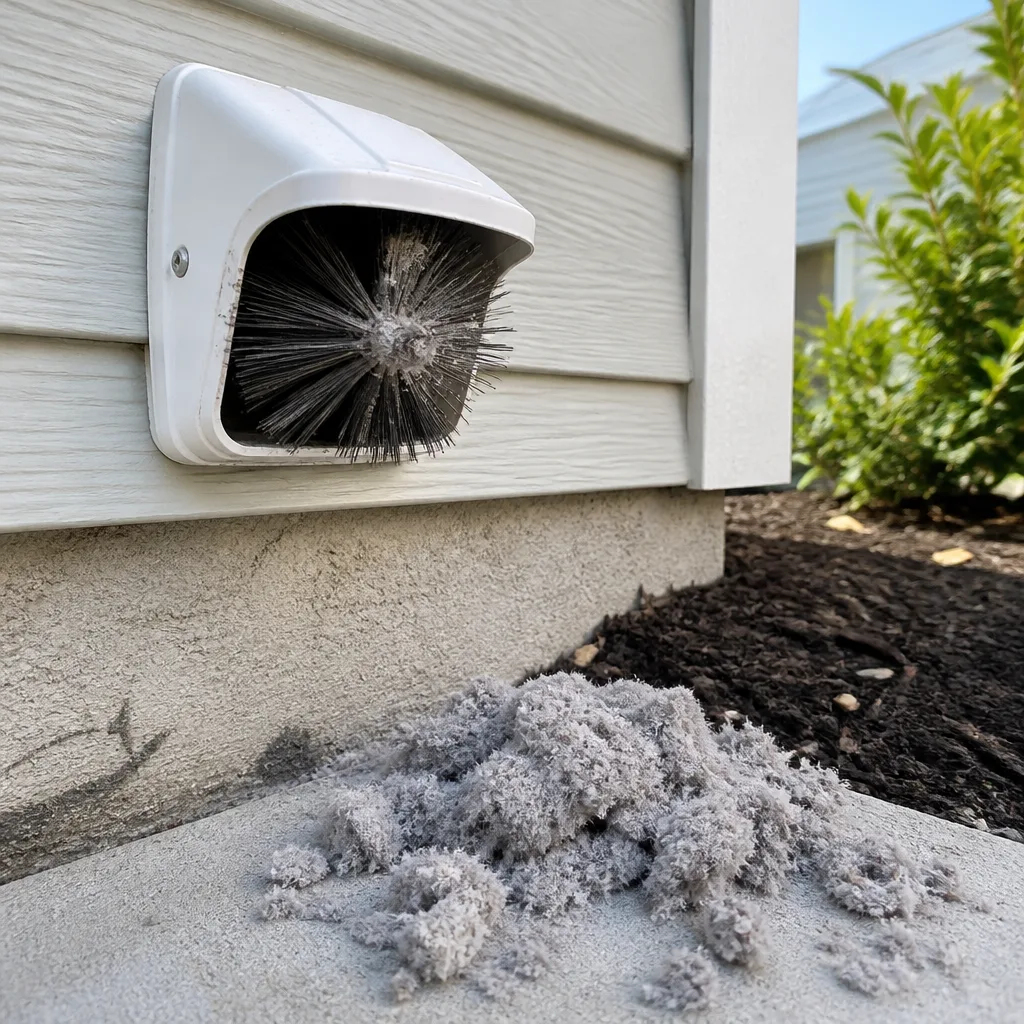 Dryer vent cleaning
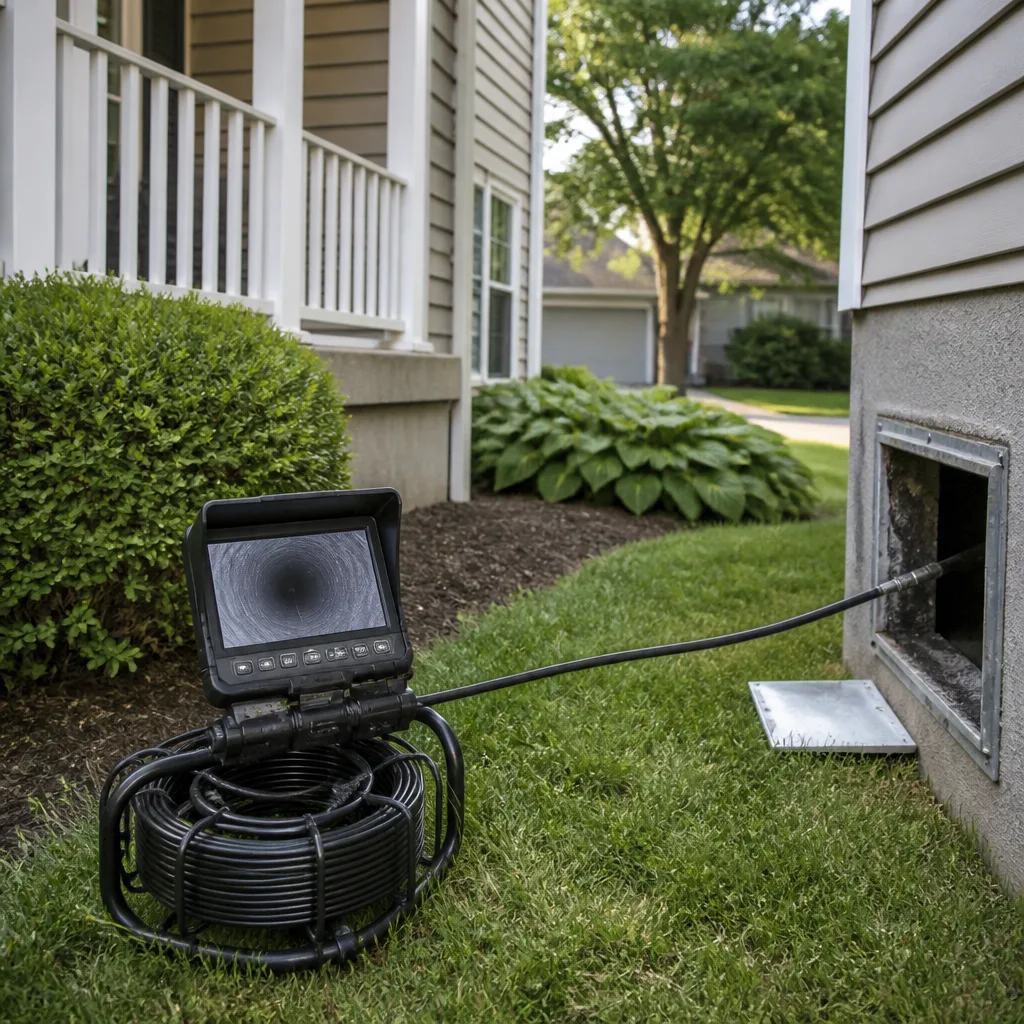 Camera inspection
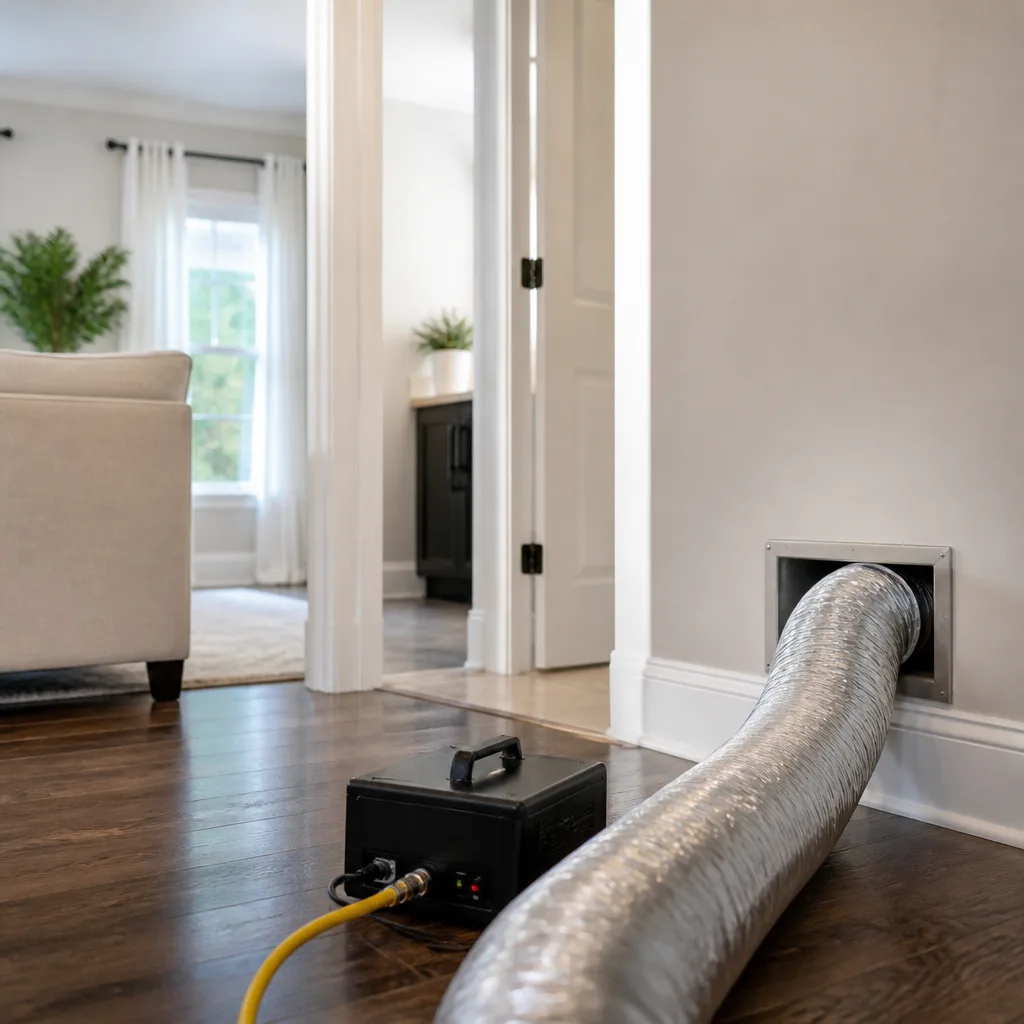 Sanitizing & deodorizing
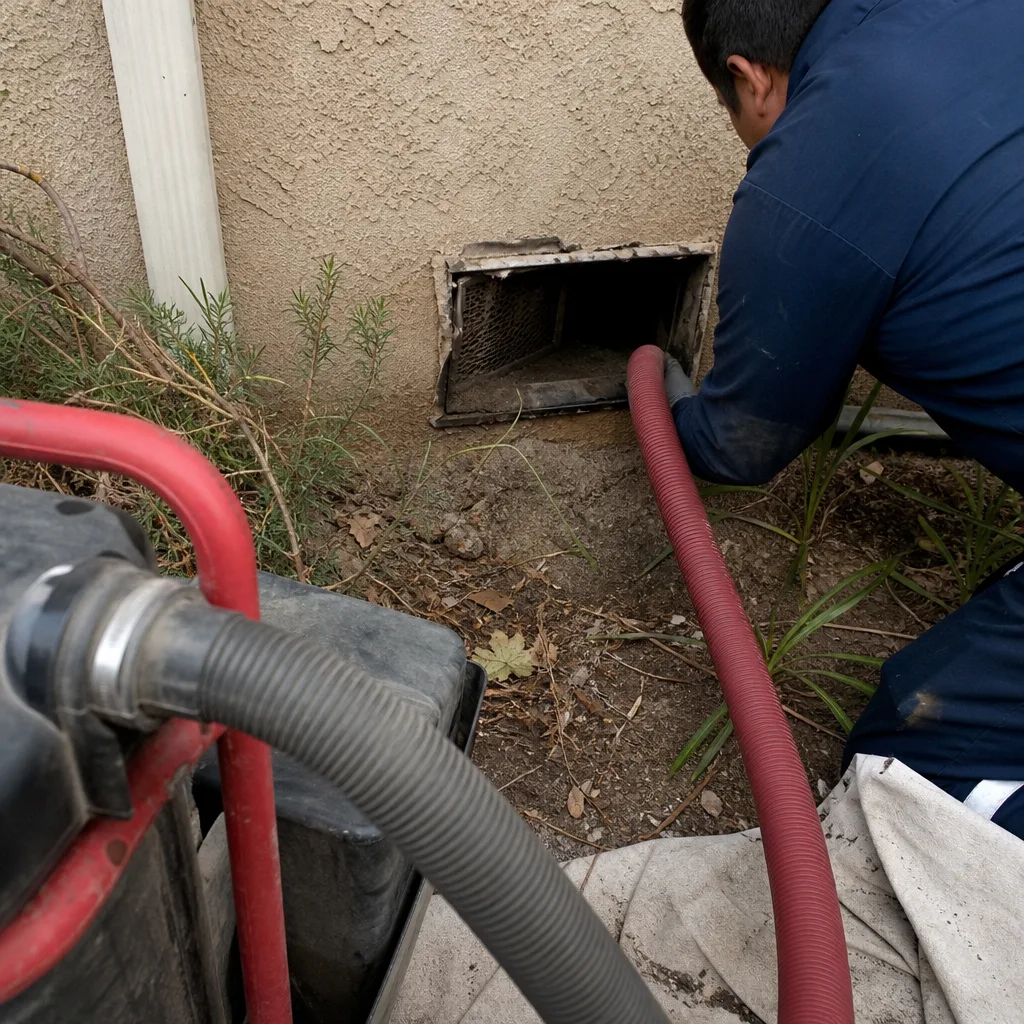
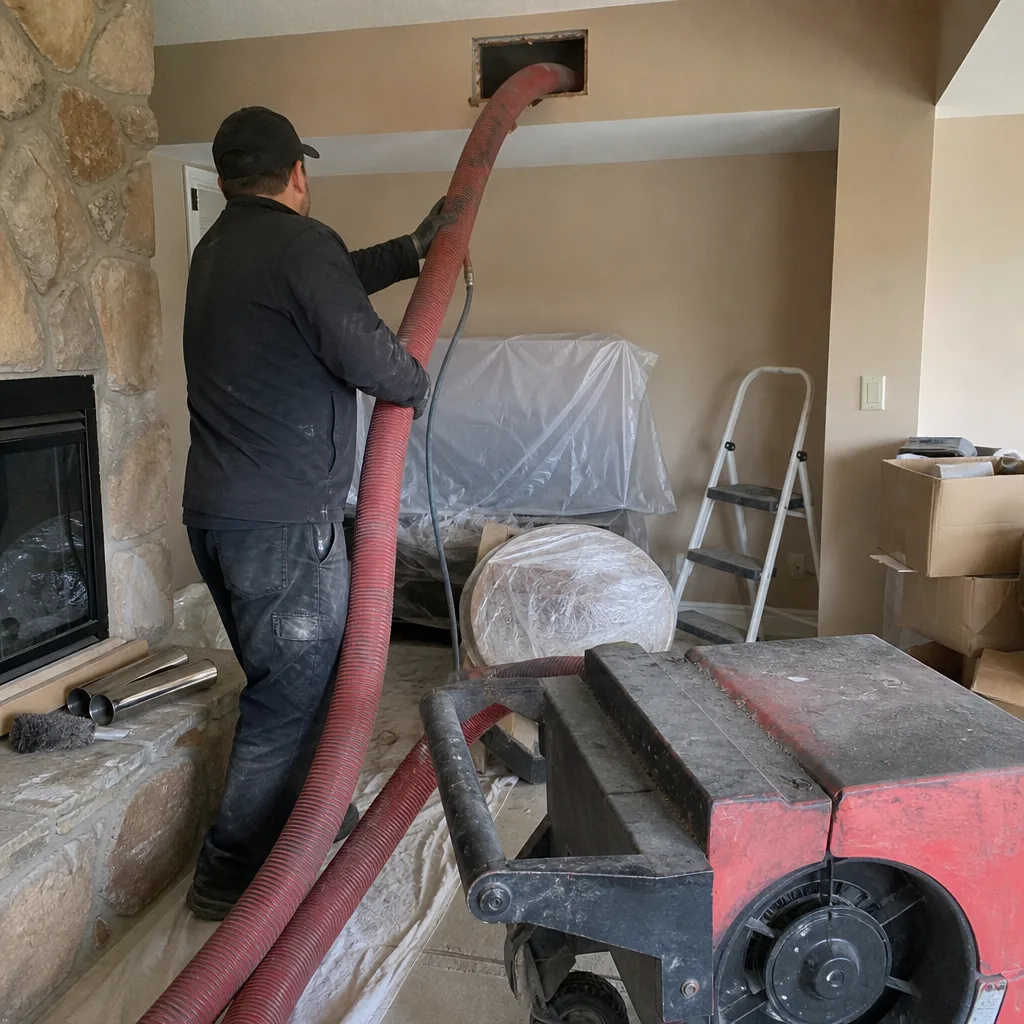
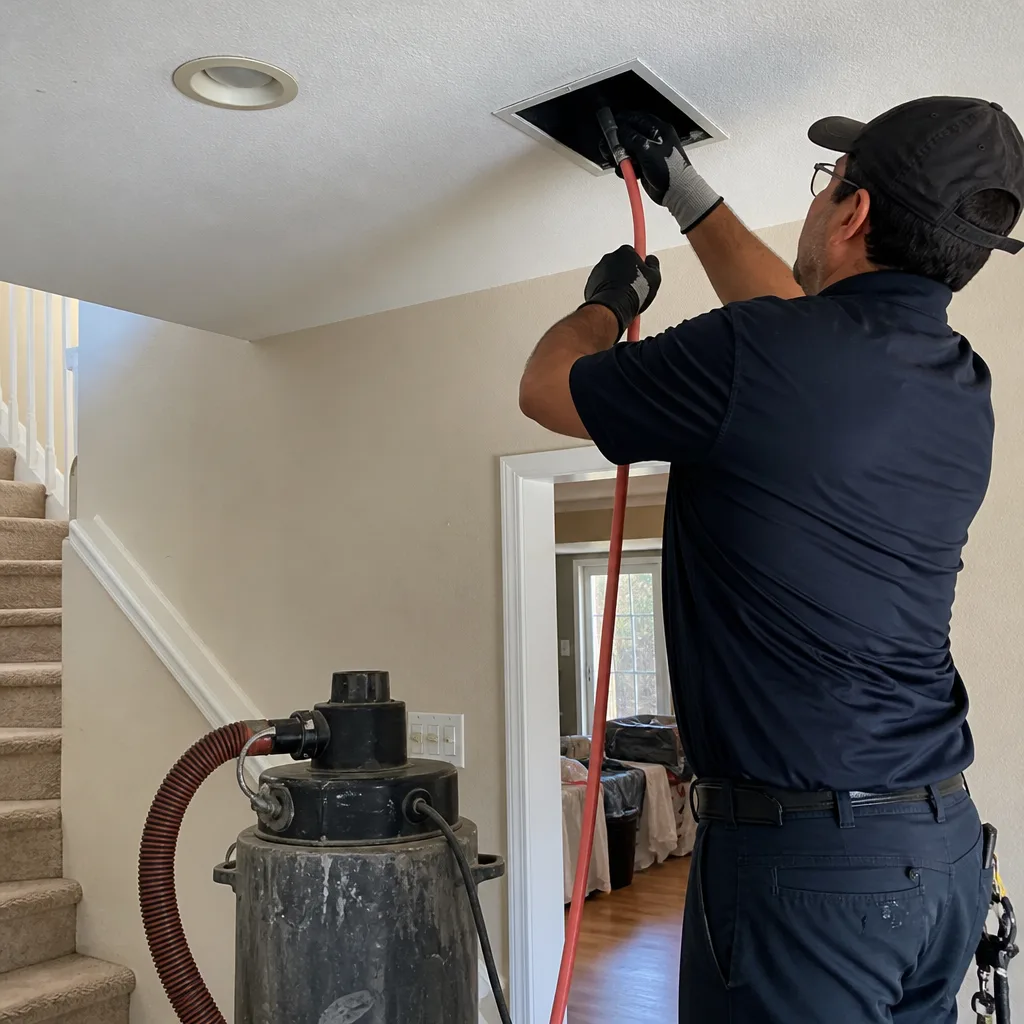
Whole-system duct and dryer vent check with before-and-after photos - you see exactly what came out of your vents
That "$99 whole-house special" is a bait ad - the real number appears once they are in your hallway, or the "clean" is a shop-vac at the register. We photograph the inside of your ducts before and after instead.
Choosing the Right Air Duct Cleaning Brand: A Buyer’s Guide for Camarillo
Most homeowners in Camarillo have never once asked a duct cleaning contractor what equipment they’ll be using. That’s a costly oversight. The gap between a remediation-grade negative air system built by Nikro or Abatement Technologies and a portable setup that costs less than the technician’s weekly fuel isn’t a matter of degrees. It’s the difference between physically removing the dust, dander, and debris from your ducts and simply stirring it up so more of it lands in your living room. We’ve spent years inside duct systems across Camarillo, from Spanish Hills to Mission Oaks, and the pattern is consistent: the companies that invest in serious equipment are the ones that deliver serious results. This guide will teach you, in plain language, what the major equipment brands actually do, why the tool matters as much as the technician holding it, and how to ask questions that separate the pros from the pretenders. For The Complete Air Duct Cleaning Guide for Camarillo Homeowners, see our dedicated resource.pecialists from the operators with a truck and a shop vac.
Styles & brands we work with
- Whole-home duct cleaning
- Dryer vent cleaning
- Camera inspection
- Sanitizing & deodorizing
Quick Answer
The best air duct cleaning brands are not retail labels you’ll find on a shelf. They are industrial systems: Rotobrush for mechanical contact cleaning, Nikro for HEPA-filtered negative pressure, and Abatement Technologies for remediation-grade containment. In Camarillo, choosing a contractor who can name and explain their equipment, especially contact-cleaning and HEPA-capture systems, is the single most reliable proxy for whether the job will actually remove what’s inside your ducts rather than recirculate it through your home.
Table of Contents
- Why the Equipment Brand Matters More Than the Company Logo
- Rotobrush: Contact Cleaning That Physically Removes Debris
- Nikro: HEPA-Filtered Negative Pressure and Why It Protects Your Home
- Abatement Technologies: When Remediation-Grade Equipment Is the Right Call
- Five Questions to Ask Any Camarillo Duct Cleaning Contractor
- Why Equipment Is Necessary but Not Sufficient: Training and System Knowledge
- What Camarillo’s Climate and Housing Stock Mean for Your Ducts
- Common Mistakes to Avoid
- When to Call a Professional
- Frequently Asked Questions
- The Bottom Line
Why the Equipment Brand Matters More Than the Company Logo
Walk through any Camarillo neighborhood and you’ll see the same mix: 1970s ranch homes with original rigid metal ducts in the Mission Oaks area, newer Lennar and Shea Homes builds up near the outlets with flex duct in the attics, and a scattering of custom properties in Santa Rosa Valley. What you won’t see from the curb is what’s inside those ducts. A 45-year-old home with original galvanized ductwork has been collecting dust, construction debris, pet dander, and sometimes much worse for half a century. A newer flex-duct home might have drywall dust and paint overspray from construction still caked to the inner liner. These are not problems a $300 consumer vacuum can solve.
The reason equipment brand matters is straightforward economics. A professional Rotobrush system, a Nikro HEPA negative air machine, or an Abatement Technologies containment unit represents a five-figure investment. No part-time operator doing three jobs a month is going to make that purchase. When a contractor owns this equipment, it tells you three things immediately. First, they do enough volume to justify the capital outlay. Second, they’ve been doing it long enough to know that consumer-grade tools fail on real jobs. Third, they’re accountable to the equipment’s performance standards, because the brands themselves train and certify operators. A contractor using a no-name vacuum has no brand standards to uphold. A contractor running Rotobrush and Nikro gear does.
In Camarillo’s competitive duct cleaning market, the brand question is the fastest filter you can apply. It cuts through marketing claims and gets to the operational reality of the company. Anyone can say “we’re thorough.” Fewer can say “we brush the duct walls with a Rotobrush contact system and capture the dislodged material with a Nikro HEPA unit.” The specificity is the signal.
Key Takeaway: Equipment brands function as a barrier to entry. Remediation-grade systems cost enough that only committed, high-volume operators own them. Asking about specific brands is the fastest way to filter out the part-timers.
Rotobrush: Contact Cleaning That Physically Removes Debris
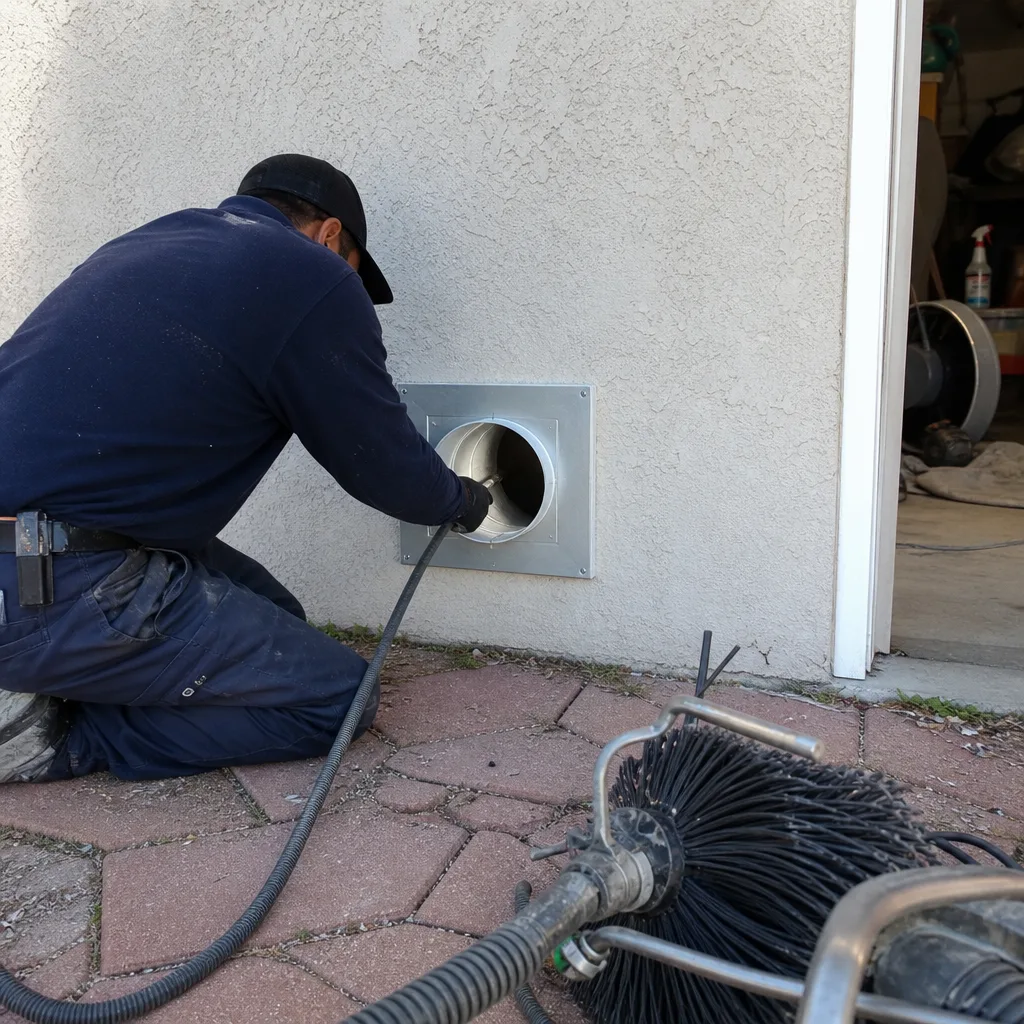
Rotobrush is not a generic term for duct cleaning. It’s a specific method and a specific brand, and the distinction matters. The system works on a continuous-contact principle: a rotating brush head travels through the duct while a vacuum runs simultaneously. The brush physically agitates the duct walls, breaking loose the film of dust, dander, and debris that static pressure has baked onto the metal or flex liner. The vacuum captures that loosened material immediately, pulling it back through the hose into a collection system rather than letting it drift into the home.
This is the critical difference between contact cleaning and what the industry calls “air sweep” or “air agitation” methods. Air-only systems blow compressed air through the ducts to loosen debris and rely on the vacuum to catch it. The problem is physics. Debris that’s been sitting in a duct for years, especially in Camarillo’s dry climate where dust can bake onto warm metal surfaces, doesn’t just lift off with a puff of air. It needs mechanical force. The Rotobrush head provides that force. The rotating bristles scrub the surface while the vacuum pulls the dislodged material out the same path it entered.
Our experience with Rotobrush equipment in Camarillo homes has shown it’s particularly effective on two common duct types here. First, older rigid metal ducts, which develop a caked-on layer of dust and sometimes corrosion byproducts over decades. The brush’s mechanical action breaks that layer loose in a way air alone cannot. Second, flex duct that has accumulated construction debris or blown-in insulation particles. The brush can navigate the spiral wire reinforcement in flex duct and scrub the inner liner without tearing it, provided the technician is trained in the right speed and pressure settings for that material. A careless operator can damage flex duct with any mechanical system. A trained one understands where the Rotobrush excels and where a lighter touch is needed.
It’s also worth understanding what Rotobrush is not ideal for. Duct systems with delicate internal insulation liners, certain types of older asbestos-wrapped ducts that should be evaluated by remediation specialists rather than cleaned, or ducts with existing structural damage are not appropriate Rotobrush applications. A technician who knows the system’s limits and tells you honestly when it’s the wrong tool is demonstrating exactly the kind of expertise this guide is about. For more details on what a full cleaning entails in Camarillo, see our Air Duct Cleaning in Camarillo page.
Nikro: HEPA-Filtered Negative Pressure and Why It Protects Your Home
Nikro equipment serves a different but equally critical function in the duct cleaning process: containment. A Nikro negative air machine creates a zone of lower air pressure inside the duct system and pulls air through a staged filtration system, with the final stage being a HEPA filter rated to capture 99.97% of particles at 0.3 microns. That’s the size range of fine dust, mold spores, and other respirable particulates. The machine doesn’t just vacuum; it contains. It ensures that whatever the agitation equipment loosens from the duct walls gets pulled into the filtration system rather than escaping into the living space.
Why does this matter more in some Camarillo homes than others? Because the county’s air quality, influenced by agricultural dust from the Oxnard Plain, Santa Ana wind events that push particulate matter across the Conejo Grade, and the general aridity of the region, means ducts here accumulate a fine, lightweight dust that becomes airborne easily. When a technician dislodges that material, it wants to float. Without HEPA-filtered negative pressure at the source, it will find its way into bedrooms, kitchens, and anywhere else the air currents take it. A shop vac with a standard filter simply cannot capture particles at the sub-micron level. It will blow them right back out through the exhaust.
For occupied homes with allergy or asthma concerns, this is the difference between a service that helps and a service that makes the problem worse for a week. We’ve had residents in Camarillo’s older neighborhoods, where homes are tightly sealed against the heat but duct systems are aging, report that low-quality cleanings dislodged decades of dust that then circulated through the house for days. A Nikro HEPA system prevents that outcome by design. The negative pressure is maintained throughout the cleaning, and the HEPA exhaust means the air leaving the machine is cleaner than the air entering it.
Ask any contractor: “Does your vacuum system have HEPA filtration on the exhaust?” If they hesitate, you have your answer. If they can name a Nikro unit or an equivalent HEPA-rated negative air machine, keep listening. The question takes five seconds to ask and eliminates a significant percentage of Covina-area operators who use standard filtration that lets fine particles back into the home.
Abatement Technologies: When Remediation-Grade Equipment Is the Right Call
Abatement Technologies occupies a specific niche in the air quality world. Their equipment is designed for professional mold remediation, asbestos abatement, and other contamination control applications where the standard is zero release into occupied space. These are the machines you’ll see on jobsites where containment barriers are erected and air scrubbers run continuously to maintain negative pressure. The brand name carries weight because it comes from a world where failure is not an option: a mold abatement job that releases spores into a home is a liability disaster.
So what does Abatement Technologies equipment have to do with duct cleaning in Camarillo? More than most homeowners realize. Duct systems in homes with a history of moisture intrusion, leaky condensate lines, roof leaks that dripped into the attic, or bathrooms vented into the attic rather than outside can develop conditions where mold and microbial growth take hold in the duct environment. Cleaning those systems without containment-grade equipment can aerosolize whatever has been growing inside. The difference between making a bad situation worse and resolving it safely is the class of equipment used.
A contractor who carries Abatement Technologies negative air and containment tools is signaling a containment-first approach. That’s not overkill. It’s the appropriate response to the reality that duct systems can harbor contamination that falls outside the scope of a cosmetic cleaning. The equipment serves as both a tool and a threshold: if a job crosses from routine cleaning into contamination territory, the contractor with remediation-grade equipment can continue safely. The contractor with a portable vacuum cannot.
Is this class of equipment necessary for every job? No. A standard dust cleaning in a well-maintained home does not require full abatement protocol. But the company that owns the equipment and knows when to deploy it is operating at a different level of professional capacity than one that treats every job the same. It’s the difference between a generalist and a specialist. It’s also the difference between a contractor who can handle what they find and one who has to stop and refer you elsewhere if the cleaning uncovers something serious.
Five Questions to Ask Any Camarillo Duct Cleaning Contractor
You don’t need to become an equipment expert to hire a qualified contractor. You need to ask the right questions and listen to how they answer. A specialist will answer confidently and specifically. A generalist will deflect or give vague answers. Here are the five questions that reveal the most.
- “What brand of equipment do you use, and can you explain how it works?” A serious operator can explain their Rotobrush contact system, their Nikro HEPA filtration, or their negative air setup in thirty seconds. If they say “we have professional equipment” without naming anything, they don’t have equipment worth naming.
- “Does your vacuum system have HEPA filtration on the exhaust?” This is a yes-or-no question with a correct answer. If the answer is no or vague, fine particulates will be recirculated into your home during the cleaning. In Camarillo homes with allergy concerns, that’s a dealbreaker.
- “What’s the CFM rating on your vacuum system?” CFM, or cubic feet per minute, measures air movement capacity. Serious negative air and vacuum systems move air at industrial volumes, typically thousands of CFM. Consumer vacuums move a few hundred. A contractor who doesn’t know their CFM rating has probably never been asked, which tells you how seriously they approach the work.
- “How does your equipment handle flex duct versus rigid metal duct?” Camarillo’s housing stock spans both types. A knowledgeable technician can explain how contact-cleaning brushes are adjusted for flex duct liners versus rigid metal, and when they would use different tools or approaches. Anyone who treats all ducts as identical is not qualified to clean your system.
- “Do you repair duct systems, or only clean them?” Cleaning and repair are connected. A cleaning often reveals disconnected joints, collapsed sections, or leaks that compromise the entire system’s performance. The contractor who can clean and repair in the same visit, like our Air Duct Repair in Camarillo service, saves you from hiring a second company and losing another day. The contractor who cleans only and walks away from structural issues leaves your system half-fixed.
Print this list or keep it on your phone. The answers you get will tell you more about the company than any review, any coupon, or any glossy flyer ever will.
Why Equipment Is Necessary but Not Sufficient: Training and System Knowledge
A Rotobrush system in untrained hands is a liability. The same rotating brush that thoroughly cleans a rigid metal duct can tear a flex duct liner if run at the wrong speed or with the wrong head. A Nikro negative air unit set up incorrectly can pull air from the wrong places and leave the majority of the system uncleaned. Abatement Technologies equipment requires an understanding of containment protocol, pressure differentials, and escape routes that comes only from training and experience. The equipment creates capability. The technician determines whether that capability translates into a job done correctly.
This is why the brand of equipment is necessary but not sufficient. The contractor’s understanding of the complete duct system matters as much as the tools they bring. A duct system is not just a collection of tubes. It’s a connected network of supply and return runs, each sized for a specific airflow volume, each affected by the condition of the others. Cleaning a system properly means understanding how air moves through it, where the accumulation points are, how to access every section, and what to do when the cleaning reveals a problem. That knowledge can’t be bought at an equipment supplier. It’s accumulated over years of working inside actual duct systems.
We’ve seen the consequences of equipment without training in Camarillo homes. Flex duct torn by overaggressive brushing, access holes cut in the wrong places and poorly sealed, remade connections that leak more than before the cleaning. The tools were professional. The work was not. When you’re evaluating a contractor, ask not just what equipment they use, but how long they’ve been using it, who trained them on it, and how they handle the unexpected problems that duct systems tend to reveal. Listen for detailed, experience-based answers. Vagueness is the tell.
What Camarillo’s Climate and Housing Stock Mean for Your Ducts
Camarillo’s climate creates a specific set of duct conditions that differ from coastal California communities or inland valleys. The city sits in a coastal valley that gets persistent marine influence from the Pacific, meaning moderate temperatures but significant overnight humidity during certain seasons. That moisture, combined with the temperature swings between daytime sun and cool nights, creates condensation cycles inside duct systems that run through unconditioned attics. Dust that enters the ducts becomes slightly damp, then dries, then becomes damp again. The result is a caked-on film that resists air-only cleaning methods and requires mechanical contact to remove.
The Camarillo housing market also includes a significant number of homes built during the 1960s and 1970s boom, particularly in neighborhoods like Central Camarillo and the areas around Arneill Road. Many of those homes have original rigid metal ductwork that has never been replaced. Sixty years of accumulated dust, construction debris from subsequent renovations, and in some cases fiberglass insulation particles from degrading attic insulation, can build up to a thickness that measurably restricts airflow. A contact-cleaning system like Rotobrush is designed for exactly this condition. Air-only methods will not remove decades of caked accumulation.
Newer developments in northern Camarillo, including the Village at the Park area and homes near Adolfo Road, often use flex duct systems that present their own challenges. Flex duct has corrugated inner walls that trap dust differently than smooth metal. It’s also more fragile and requires a technician who knows how to clean it without damaging the liner. And because many of these homes were built in planned developments with fast construction timelines, it’s not uncommon to find construction debris, drywall dust, and even food wrappers in the ducts from the building period. A professional cleaning should be able to identify and remove this debris safely.
Property managers in Camarillo who handle rental turnarounds know the pattern well. Between tenants, ducts accumulate dust, pet dander, and sometimes evidence of unresolved issues like condensation problems or pest intrusion. A documented, thorough cleaning with professional equipment is often a standard part of the turnover process. For one of the most practical services a rental property owner can schedule, see our Duct Cleaning Camarillo home page and the related service pages linked from it.
Common Mistakes to Avoid
- Choosing based on coupon price alone. A $79 whole-house duct cleaning in Camarillo is not a bargain. It’s a loss-leader designed to get a technician in the door so they can upsell you on services you may or may not need. The economics of professional equipment don’t work at that price point. A $79 quote tells you the company is running cheap gear and will make up the difference in aggressive sales tactics.
- Not asking about HEPA filtration. If your contractor’s vacuum system doesn’t have HEPA filtration on the exhaust, the cleaning will release fine particulates into your living space. This is the single most common regret we hear from Camarillo homeowners who hired low-cost providers. The ducts look cleaner; the air feels worse for a week.
- Treating all equipment as equal. “We use professional equipment” is not an answer. There is a meaningful difference between a Rotobrush contact system, a Nikro HEPA negative air machine, and a portable consumer vacuum with a spinning brush attachment. One removes debris from duct walls. One contains what’s dislodged. One just moves dust around.
- Ignoring the repair conversation. Many Camarillo homes have duct leaks, disconnected sections, or collapsed flex duct that a cleaning alone cannot fix. If your contractor finds these issues and can’t repair them, you’re left with a half-solved problem. Ask before the job starts whether the company can handle duct repair if needed.
- Forgetting the dryer vent. Dryer vents are part of the same exhaust system that moves air out of your home, and they represent a specific fire risk that doesn’t apply to your HVAC ducts. Lint accumulation in dryer vents is a leading cause of structure fires. A company that cleans air ducts but leaves your dryer vent untouched is ignoring a genuine safety hazard. Our Dryer Vent Cleaning in Camarillo service addresses this directly, because dryer vents are a fire risk, not just an air quality issue.
- Not requesting before-and-after documentation. Professional duct cleaning companies should be able to show you what your ducts looked like before and after the service. This documentation proves the work was actually done and gives you a baseline for future cleanings. A contractor who can’t provide photos or video evidence of the work is asking you to take their word for it.
- Hiring without asking about duct types. Ask the contractor to describe how they handle flex duct differently from rigid metal. If they treat both the same, they’ll damage one of them. Camarillo’s older homes and newer homes require different approaches, and a technician who doesn’t know the difference is dangerous.
When to Call a Professional
Some signs indicate the need for professional duct cleaning rather than just curiosity or routine maintenance. If visible dust blows from your supply registers when the system starts up, that’s material being pushed out of the ducts and into your home. If you notice worsening allergy symptoms or respiratory irritation that improves when you leave the house, your ducts may be circulating accumulated allergens. If you’ve completed a renovation, construction dust has likely entered the duct system and is now being distributed throughout the home. If your energy bills have crept up without a change in usage habits, restricted airflow from accumulated debris may be forcing your HVAC system to work harder. If you smell musty odors when the system runs, that suggests moisture and possibly microbial growth in the ducts. None of these conditions resolve on their own. Our Air Duct Cleaning services can address these issues properly.s free estimates in Camarillo, call (833) 593-6403 to schedule an assessment.
Frequently Asked Questions
Air duct cleaning in Camarillo typically ranges from $300 to $700 for a standard single-family home, depending on the size of the system, the number of vents, and the condition of the ducts. Homes with significant accumulation, multiple systems, or contamination issues will fall at the higher end or beyond. Any quote dramatically below this range should be treated with skepticism, because professional equipment and trained operators cannot operate profitably at those prices. Call (833) 593-6403 for an exact quote, estimates are free.
Cheap quotes almost always mean cheap equipment and minimal labor. A company running a portable consumer vacuum and doing minimal agitation can offer a low price because their costs are low, but the cleaning they deliver is superficial. Professional contact cleaning with Rotobrush and HEPA capture with Nikro equipment costs more because the equipment costs more, the training costs more, and the process takes longer. The result is a meaningful difference in what’s actually removed from your ducts.
Reputable duct cleaning companies provide before-and-after documentation, typically photos or video from inside the ducts, so you can see the difference with your own eyes. This is standard practice among specialists and should be requested if not offered. A contractor who can’t show you what was removed or what the ducts look like after the service is asking for trust without evidence.
For most Camarillo homes, every 3 to 5 years is a reasonable interval, but the answer depends on specific factors. Homes with shedding pets, residents with allergies or asthma, recent renovations, or a history of moisture problems may need more frequent cleaning. Homes with minimal occupancy, no pets, and good filtration may stretch to 5 years or longer. The condition of the ducts, visible through inspection, is a better guide than any fixed schedule.
Air duct cleaning can reduce the concentration of allergens circulating in your home, particularly dust, pet dander, and pollen that accumulate in ducts and get redistributed during HVAC operation. For allergy sufferers in Camarillo, where outdoor allergens from agricultural and natural sources are prevalent, removing the indoor reservoir of these particles can make a meaningful difference. The key is that the cleaning must use HEPA capture so the allergens are removed rather than resuspended. Call (833) 593-6403 for more details.
Air duct cleaning addresses the HVAC distribution system that circulates conditioned air through your home, removing accumulated dust, dander, and debris. Dryer vent cleaning addresses the exhaust duct that carries lint and moisture from your dryer to the outside, and it matters primarily for fire safety. Lint is highly combustible, and a restricted dryer vent is a genuine fire hazard. Both services require different equipment and different approaches, and both should be part of a thorough duct system maintenance plan for your Camarillo home.
The Bottom Line
The equipment brand a duct cleaning company uses is the clearest signal of their technical seriousness that you can evaluate before they ever set foot in your home. Rotobrush mechanical contact cleaning, Nikro HEPA-filtered negative pressure, and Abatement Technologies containment-grade equipment represent real capital investments that only committed operators make. But the equipment is only part of the equation. Training, system knowledge, and the willingness to handle repairs make the difference between a cleaning that looks good and a cleaning that actually solves the problem. In Camarillo, where climate conditions create stubborn duct accumulation and the housing stock spans multiple duct types, the questions in this guide will help you find a contractor who can do the job properly. Ask about equipment. Listen for specifics. And when you find a specialist who can clean, contain, and repair, you’ve found a contractor worth keeping. For more guides & resources, explore our blog.repair in one visit, you’ve found the right company.
Written by the team at Duct Cleaning Camarillo, serving Camarillo since 2013.
See the difference
 Before
 After
 Before
 After
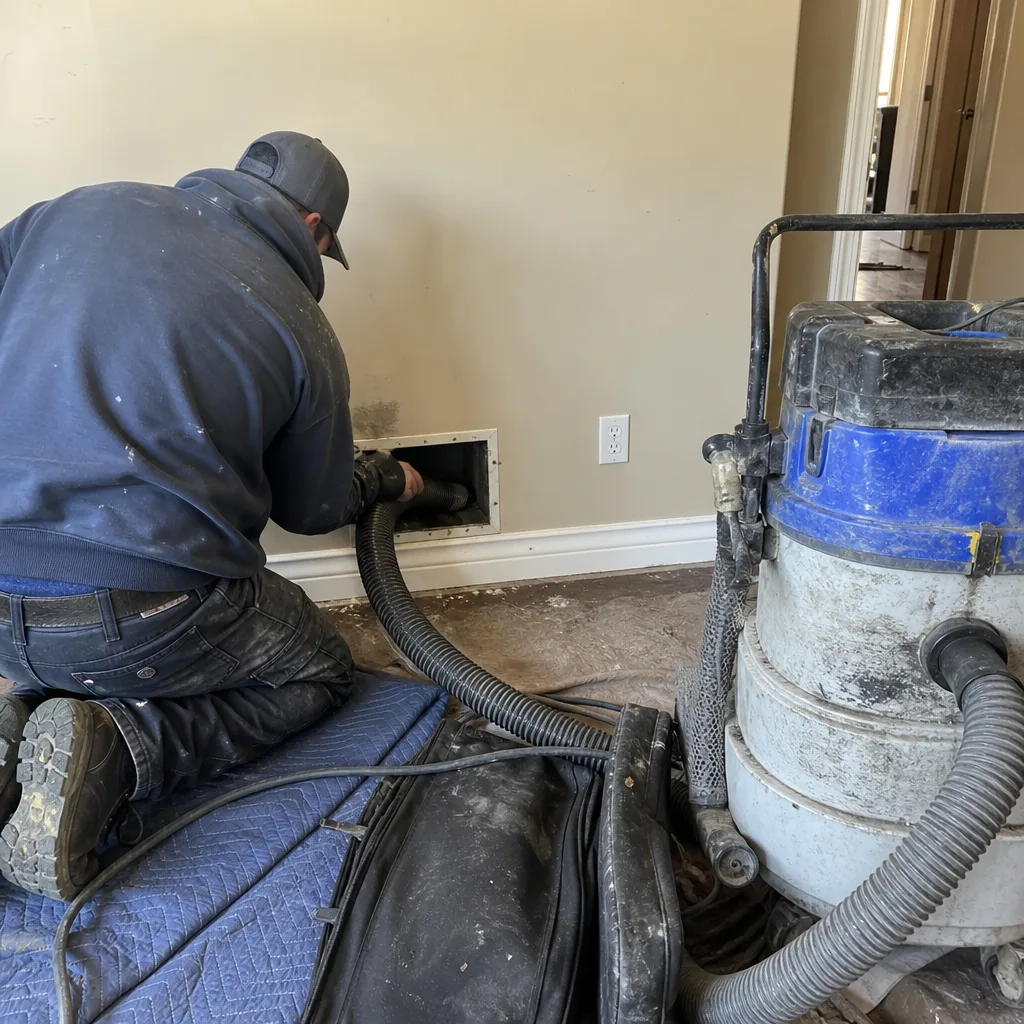 Before
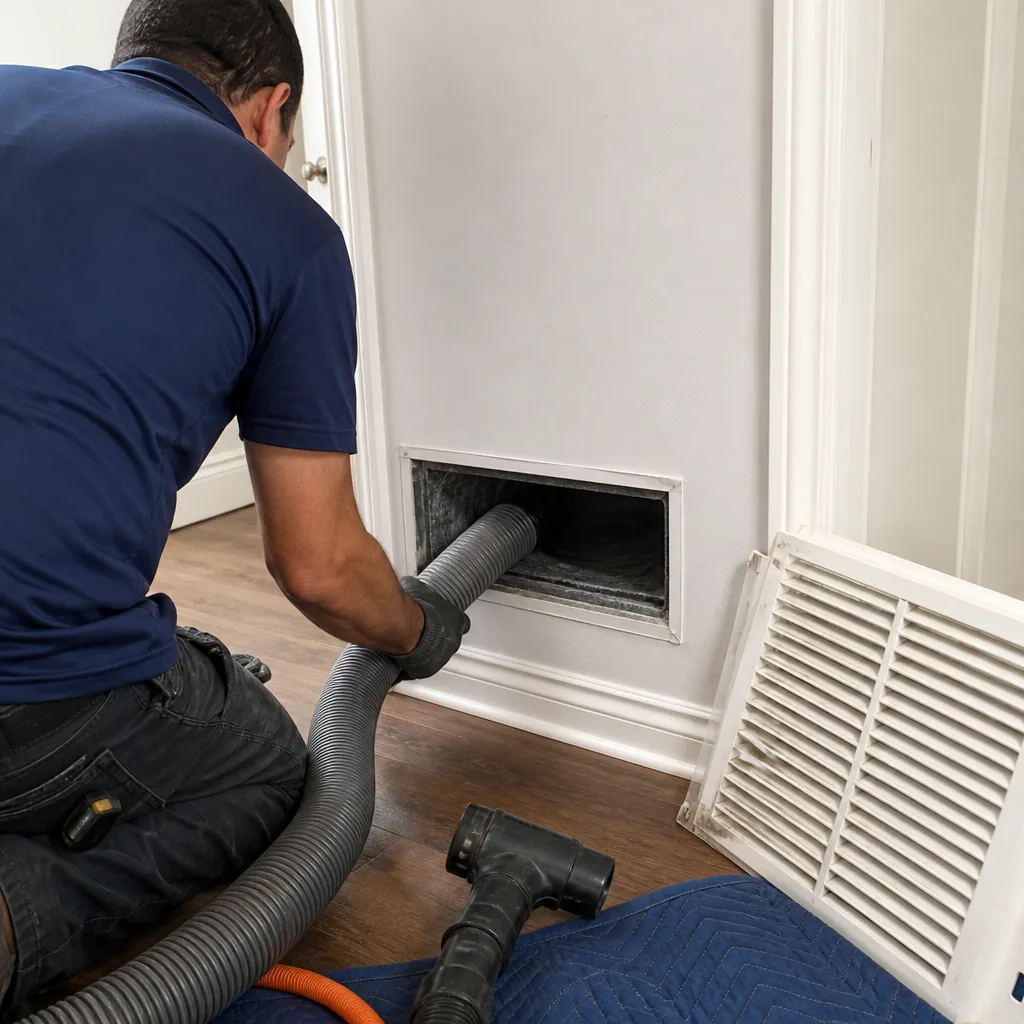 After